

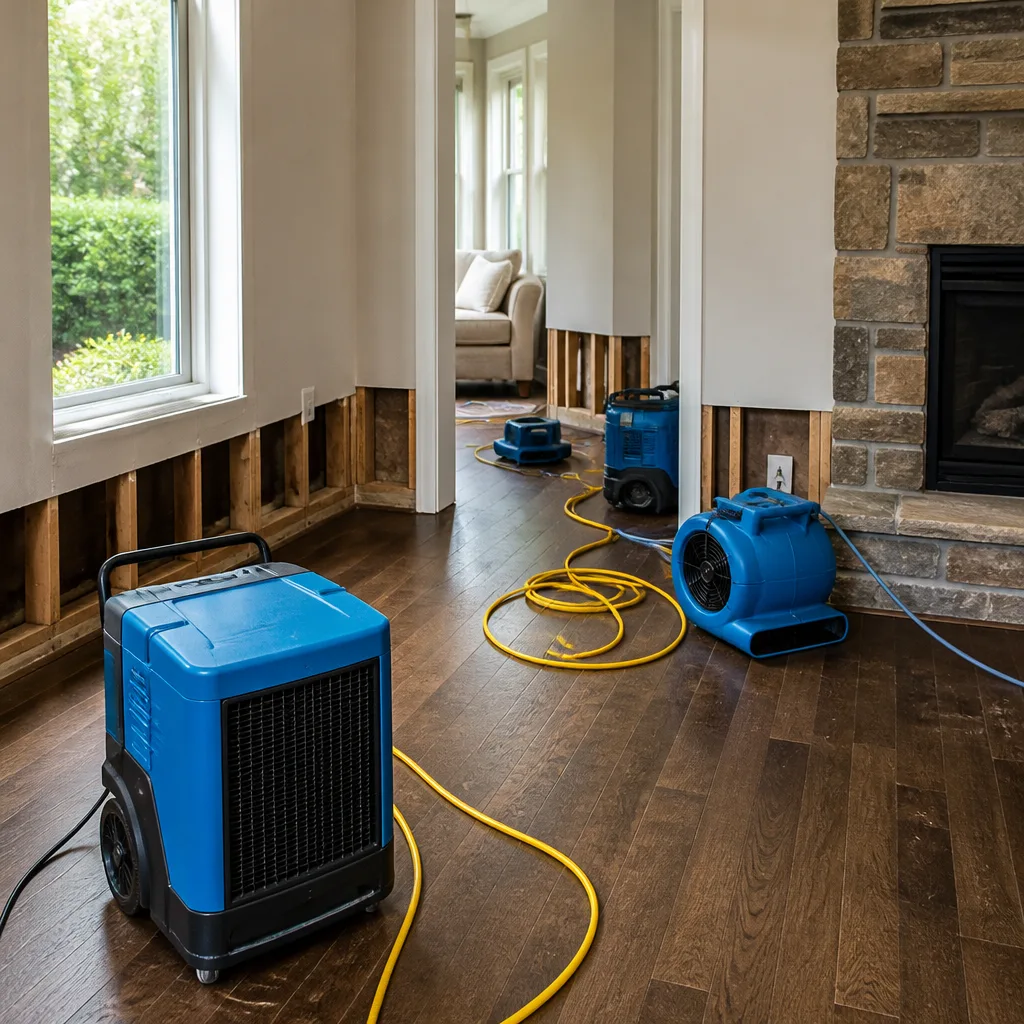
 Water damage drying
 Fire & smoke cleanup
 Mold remediation
 Storm response
 Sewage cleanup
 Reconstruction
Free visual inspection and a written scope of work before any mitigation begins - photos, moisture readings, and drying logs go in your claim file
The scope we write is the scope we bill. Anything new gets shown to you, in writing, before we touch it.
Get your free estimateFast, Reliable Fire Damage Restoration Across Ontario
A kitchen fire in a 1960s Ontario home near the 60 freeway corridor left our crew standing in two inches of firefighting water at 3 a.m., tracing a tide mark through plaster walls that had absorbed smoke for hours before the first engine arrived. That is the reality of fire damage in this city. It is never just fire. It is water, soot, collapsed drywall, and a family standing in the driveway in pajamas. Tidemark Water Damage Riverside responds to Ontario homes and the surrounding Inland Empire with crews who know the difference between a mid-century ranch on a raised foundation and a newer tract home on a slab. We are the local arm of the Cedarwell Care Promise, and we have been doing this work since 2006. If you are standing in a fire-damaged house right now, call (341) 212-7342. A live person answers, day or night.
Fire Damage Restoration in Ontario: What It Actually Costs and How It Works
Fire damage restoration in Ontario typically runs between $3,200 and $14,000 for a single-family home, with the final number driven by three things: how far soot traveled through the HVAC system, how much water the fire department put down, and whether the home sits on a slab or a raised foundation. Soot removal alone in an average Ontario living room runs $900 to $2,800. Full structural drying after firefighting water extraction runs $1,400 to $4,200 depending on square footage. You see the written price before we start. That is not a courtesy. It is how the Cedarwell Care Promise works on every job, in every Ontario neighborhood from the 91761 zip code near the 10 freeway to the newer subdivisions off Archibald Avenue.
What makes Ontario different from most cities is the volume of warehouse and distribution-center fire losses we respond to. A fire in a freight hub near the Ontario International Airport or along the 60 corridor can take out 80,000 square feet of racking, inventory, and loading docks. That is not a house call. That is a commercial restoration project requiring containment, structural assessment, and coordination with logistics managers who need their dock doors operational within days, not weeks. Our Fire Damage Restoration team handles both scales because we built our process around the tide mark philosophy: find exactly where the damage traveled, dry past it, and document every step with photos before we leave.
Restoration work we handle
Why Ontario Homeowners Call Tidemark First
Ontario homeowners call us because we treat their house the way we would treat our own on a bad day. Shoe covers go on at the door. Drop cloths cover the entryway floor before the first air mover comes in. We ask before we move a child’s artwork off the counter or shift furniture in a smoke-damaged living room. Rick Sumner, who leads our restoration crews, drills one thing into every technician: the family is standing right there. Explain what you are doing before you do it. The house is not a job site. It is their home, and it just burned.
Our technicians are background-checked, uniformed, and credentialed through IICRC, RIA, and IFA. The equipment we bring into Ontario homes is the same professional-grade machinery used by leading restoration specialists: Dri-Eaz dehumidifiers for structural drying, XPOWER air movers for circulation, and Phoenix systems for targeted moisture extraction. We run lower-decibel settings during school hours and nap time when we can, because a quiet crew respects the family’s rhythm. And every job ends the same way: a photo of the clean-up, shared with you before we pull out of the driveway.
Smoke Odor Removal in Ontario
Smoke odor removal in Ontario is a science, not a spray. The first sentence of every estimate we write for a smoke-damaged home in Ontario starts with containment: sealing off the affected rooms so odor molecules do not migrate through ductwork into undamaged bedrooms and attic spaces. Ontario’s older homes, particularly the mid-century single-family houses near the 60 freeway corridor, often still run original HVAC systems with unsealed returns. Smoke gets pulled into those returns and recirculated for days. If you only clean the visible soot and ignore the duct path, the smell comes back within a week.
In Ontario, smoke odor removal on a single room runs $600 to $1,900. A whole-house odor treatment, including duct cleaning and hydroxyl generator use, runs $1,800 to $4,500. Homes near the northern foothills and the 60 see a seasonal spike here: during Santa Ana wind season, wildfire particulates get driven into window frames, attic vents, and door seals, and homeowners call us for what they think is a bad smell from the fire itself. It is often wind-driven soot infiltration, and it etches painted surfaces if it sits too long.
Thermal fogging and hydroxyl treatment
For deep smoke odor in Ontario homes, we often pair hydroxyl generation with thermal fogging. The fog reaches exactly where the smoke reached, breaking down odor molecules in plaster walls, subflooring, and insulation. This is the standard for homes where smoke penetrated porous surfaces. It is not a masking agent. It neutralizes the source.
When duct replacement is the only honest answer
In some older Ontario homes we inspect, the ductwork is original to the house and heavily contaminated. We will tell you if cleaning will not hold. Replacement costs more up front, but it is the difference between a house that smells clean in March and one that smells like smoke again in August when the HVAC kicks on.
Fire and Water Damage Restoration in Ontario
Fire and water damage restoration in Ontario is one continuous job, not two separate ones. The moment firefighters leave, water from suppression efforts is already migrating through drywall, flooring, and subfloor. In Ontario’s slab-foundation tract homes, that water has nowhere to drain vertically the way it does in a raised-foundation house with a crawl space. It pools against the slab, wicks up into baseboards and studs, and creates hidden moisture pockets. If moisture mapping is not done with thermal imaging and penetrating meters, mold growth starts within 24 to 48 hours inside the wall cavity.
Fire and water damage restoration in a typical Ontario single-family room runs $2,200 to $6,500 when it includes extraction, structural drying, soot cleaning, and antimicrobial treatment. Slab homes add complexity because dry-out requires containment and low-grain-refrigerant dehumidifiers running longer than a crawl-space home would need. You should know that number in writing before anything is moved. That is the Tidemark standard.
Water classification after fire suppression
After a fire, the standing water in an Ontario home is classified by contamination level. Water from a clean municipal supply line that fed a sprinkler system is Category 1. Water that has mixed with ash, soot, and burned building materials is Category 2 or 3, meaning it requires antimicrobial treatment and often selective demolition. Our IFA-credentialed technicians classify the water on site and show you what that means for the scope of work and the final price.
Why moisture mapping matters on slab foundations
Ontario’s newer tract homes, especially those built since the 1990s off Archibald Avenue and in the neighborhoods west of Vineyard Avenue, sit on concrete slabs. Water trapped against a slab does not evaporate quickly. It migrates laterally. Our Dri-Eaz and Phoenix moisture-mapping equipment finds the tide mark in the slab and the wall assembly, and we dry past that line, not just to the visible stain. That is the entire point of the name Tidemark.
Trusted Brands We Service in Ontario
We service homes with equipment and building systems from a wide range of manufacturers, and because Ontario is a major distribution hub, parts availability here is better than almost anywhere in the Inland Empire. When a fire damages a furnace, an air handler, or a water heater in an Ontario home, we can often source replacement components from local supply houses the same week. Our technicians work on HVAC systems from all major brands and drying equipment from Dri-Eaz, Phoenix, and XPOWER. Fast turnaround is not a slogan here. It is a function of being in a city that moves freight for the entire region. We stock common restoration supplies locally and coordinate with Ontario-based suppliers to keep a job moving.
See the difference
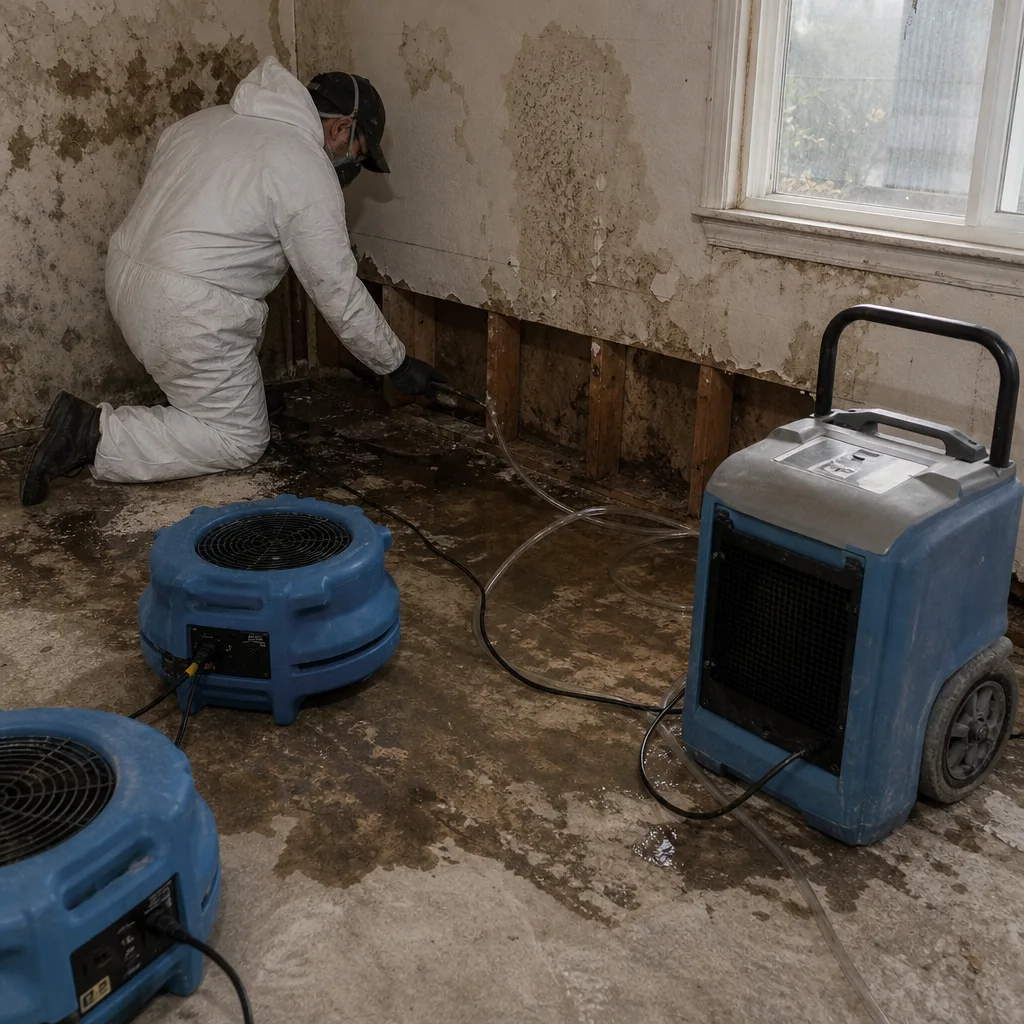 Before
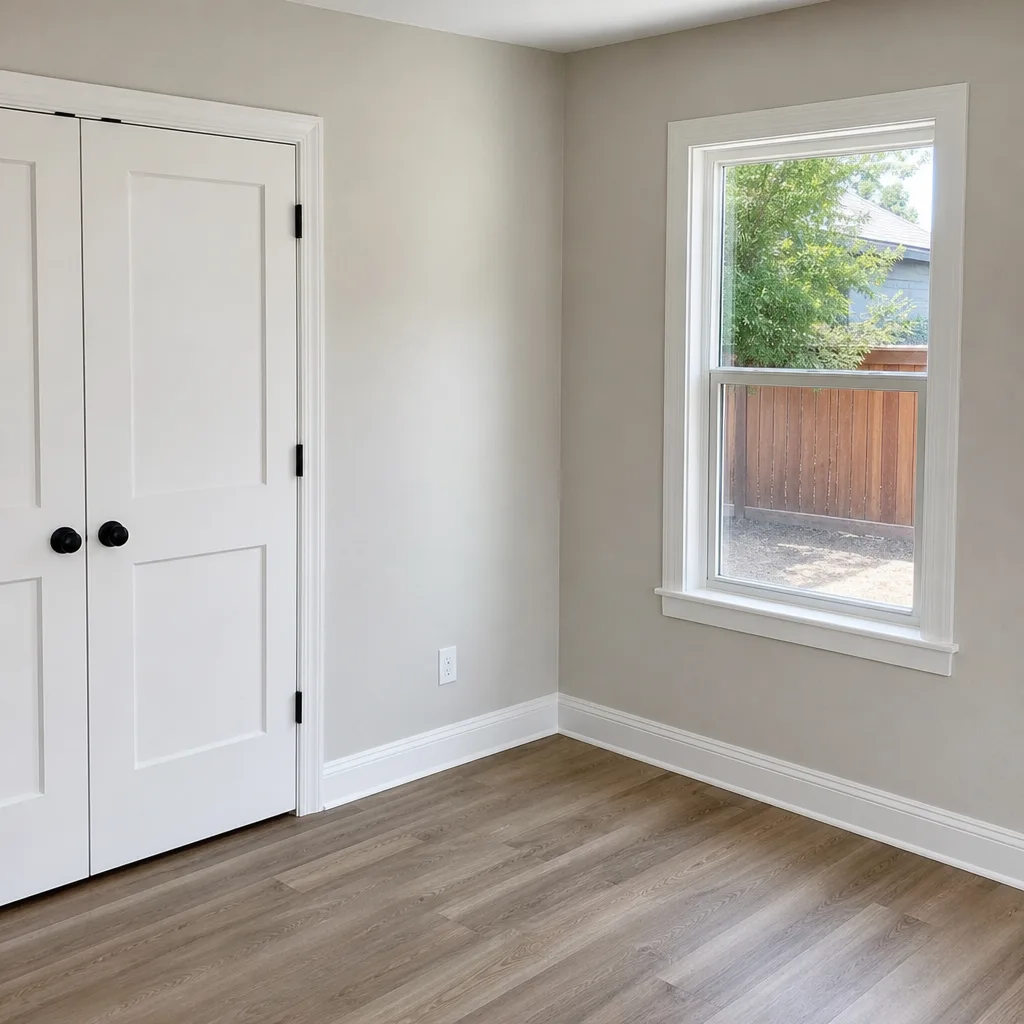 After
After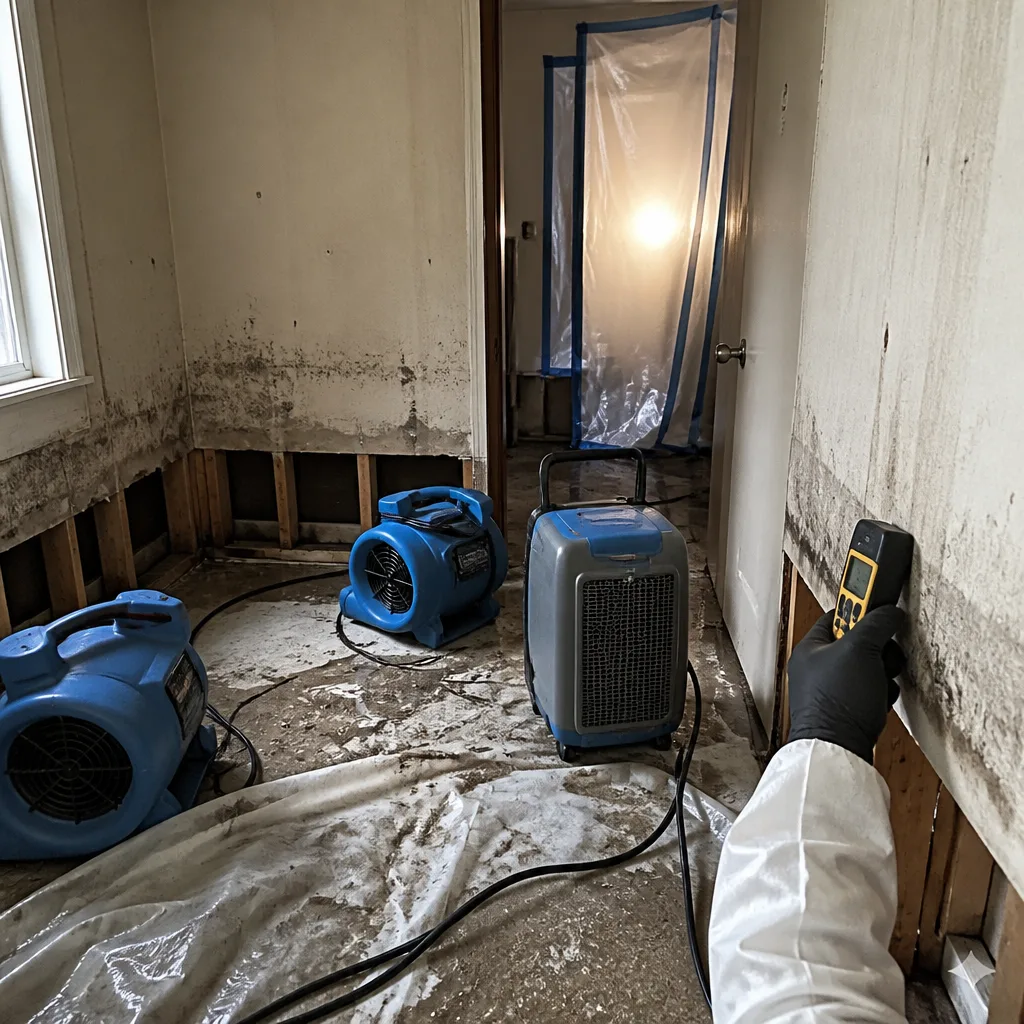 Before
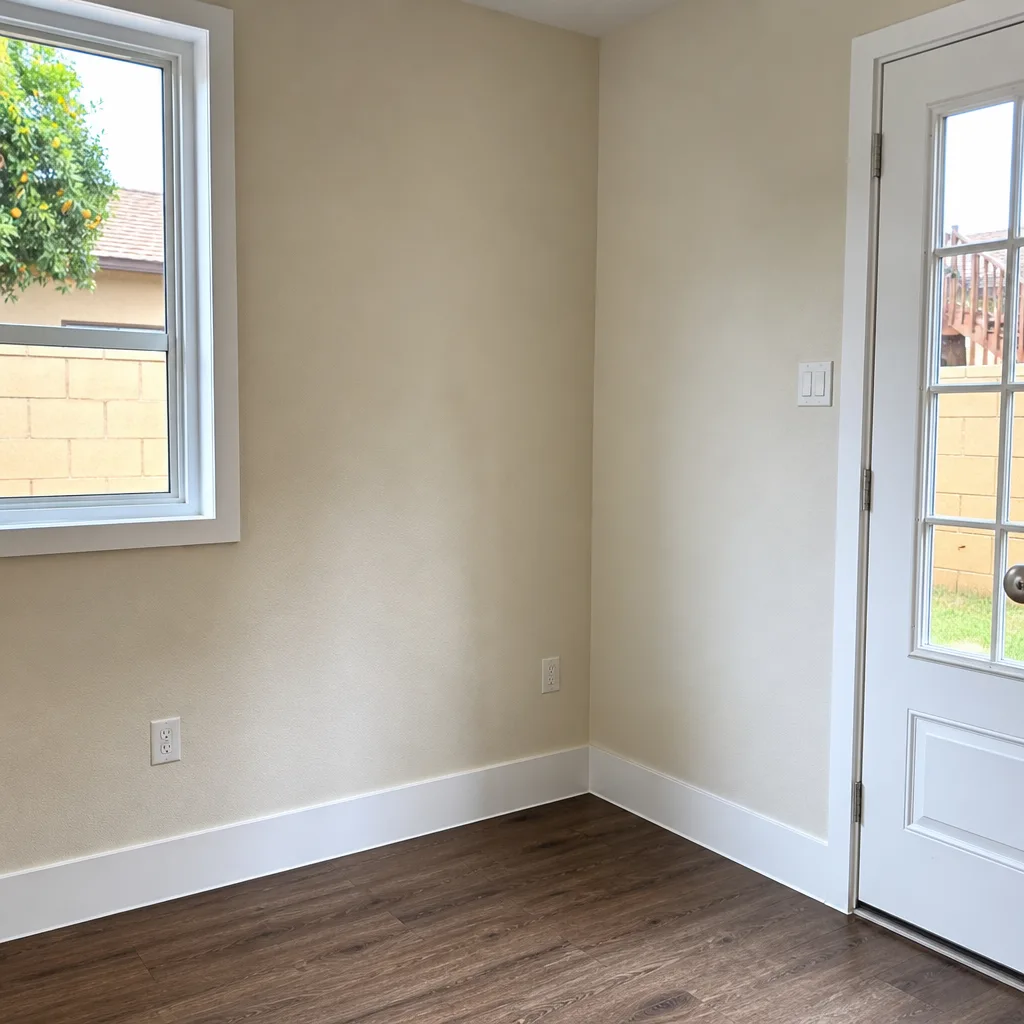 After
After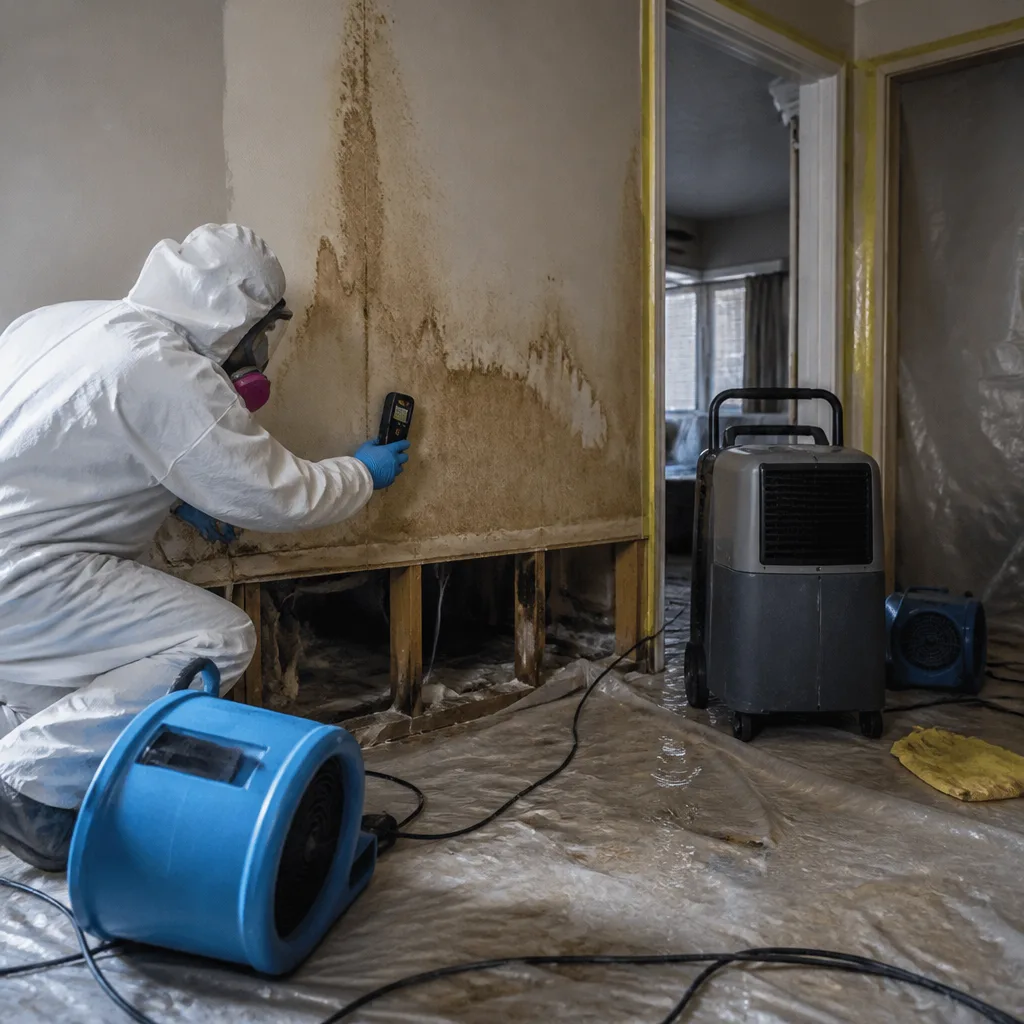 Before
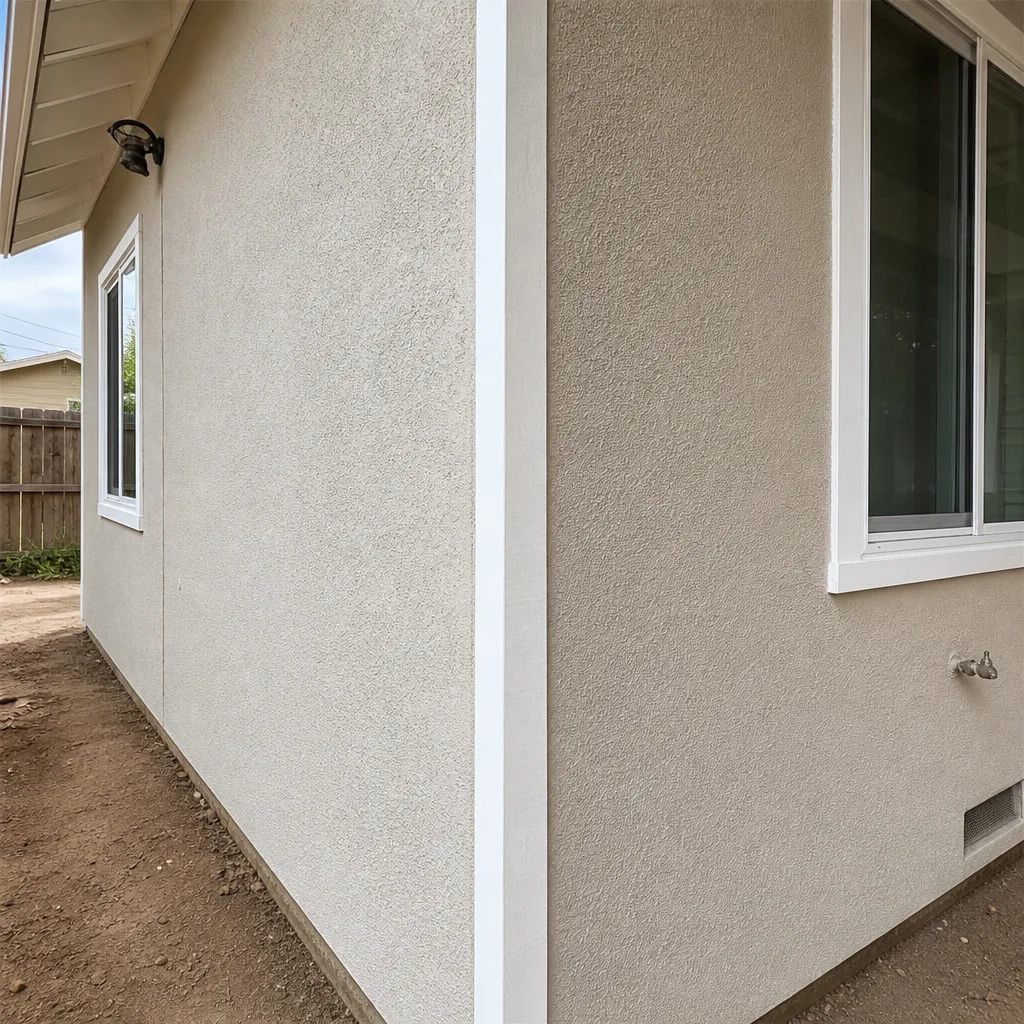 After
AfterCommon Fire Damage Restoration Problems We See in Ontario Homes
- Delayed soot cleanup after Santa Ana wind events. Ontarians near the 60 and the northern foothills often wait weeks after a wind-driven smoke event before calling, by which point soot has etched window glass and permanently stained painted drywall. Early cleaning is cheaper.
- Hidden moisture pockets in slab homes. Firefighting water in a slab-foundation tract home pools and wicks laterally. Without moisture mapping and long-duration drying, mold appears inside wall cavities weeks after the fire is out.
- Smoke spread through original HVAC in older homes. The mid-century homes that make up much of Ontario’s housing stock have duct systems without sealed returns. Soot and odor travel into undamaged rooms and attics during the fire and during initial cleanup if containment is not the first step.
- Warehouse-scale losses with compressed timelines. A fire in an Ontario distribution center means supply chain managers need restoration crews who can handle massive square footage while logistics teams push to reopen dock doors. This is not a residential workload, and not every restoration company in Ontario is set up for it.
Pricing for Fire Damage Restoration in Ontario, CA
Here is what we tell every Ontario homeowner who asks about cost before they have committed to anything. Soot removal from walls and ceilings in a 10×12 room runs $900 to $2,800. Smoke odor treatment for an entire home runs $1,800 to $4,500. Fire and water damage restoration, including extraction and structural drying, runs $2,200 to $6,500 for a typical single-room fire. A whole-house fire in a 1,800-square-foot Ontario home can run $8,000 to $14,000 or more, depending on structural repairs and content cleaning. Every estimate is written, itemized, and delivered before any work starts. Call (341) 212-7342 for a free estimate, and we will walk you through exactly what is needed in your home.
We Also Serve Cities Near Ontario
Tidemark Water Damage Riverside serves Ontario and the surrounding communities, including Montclair, Claremont, Upland, and Rancho Cucamonga. If you live just over the city line and you are dealing with fire or smoke damage, call us. Our crews dispatch from the Inland Empire office and reach the wider Ontario metro area quickly.
Serving Ontario, CA - Our Local Coverage Area
We’re based in the Ontario area and know this community well. Use the map below to see our service coverage - if you’re nearby, we can almost certainly help.
FAQs About Fire Damage Restoration in Ontario
Restoration should begin within hours, not days. A warehouse fire near the Ontario airport or along the 60 corridor shuts down receiving and shipping operations immediately, and every day a distribution center is offline costs the operator more than the restoration itself. Our crews mobilize for commercial losses with containment first, then structural assessment, then water extraction and soot removal, working with facility managers to get dock doors functional as fast as the building allows. If you are a logistics manager reading this the morning after a fire, call (341) 212-7342 now. We will have a crew on site today.
Water used to extinguish a house fire in Ontario is typically Category 2 or Category 3 contamination. It has mixed with ash, soot, and burned construction materials, which means it cannot simply be dried in place. The water requires extraction, antimicrobial treatment, and often selective removal of saturated drywall and insulation. Clean water from a sprinkler head that activated before the fire spread is Category 1 and may only require drying. Our technicians classify the water before writing your scope of work, so you know what you are paying for and why.
Yes. Homes bordering the 60 and the northern foothills sit in the path of Santa Ana wind-driven smoke, which pushes wildfire particulates directly into window seals, attic vents, and door frames. We see a measurable spike in soot and ash cleanup calls from these neighborhoods during fire season, and homeowners are often surprised to find their “musty smell” is actually wind-deposited soot. Cleaning it early prevents permanent etching on painted surfaces and glass.
A slab foundation does not give firefighting water a vertical drainage path. In a raised-foundation home, water can move down into the crawl space, where it is at least accessible. On a slab, the water pools and migrates laterally through sill plates, baseboards, and stud bays. Drying requires containment and low-grain-refrigerant dehumidifiers running for extended periods, plus moisture mapping to confirm the slab and wall assembly have reached dry standard. Skipping that mapping is how hidden mold pockets form weeks after the fire.
Pack-out means our team inventories, photographs, and removes salvageable contents from affected rooms so structural restoration can proceed without damaging your belongings. In Ontario homes with original HVAC, pack-out must be paired with containment, or soot migrates into the items we are trying to protect. We document everything before it moves, we label every box, and we ask before anything is handled. When restoration is complete, we bring everything back and place it where you want it. The pack-out process in a typical Ontario home takes one to two days, depending on contents volume.
If your Ontario home or commercial property has fire damage, call (341) 212-7342 now. A real person answers, and the estimate is free. Whether you are near the 60 corridor, off Archibald Avenue, or in the logistics district near the airport, our crews are ready to respond.
Written by Rick Sumner, Owner at Tidemark Water Damage Riverside, serving Ontario and the Inland Empire since 2006.