
 Water damage drying
 Fire & smoke cleanup
 Mold remediation
 Storm response
 Sewage cleanup
 Reconstruction
Free visual inspection and a written scope of work before any mitigation begins - photos, moisture readings, and drying logs go in your claim file
The scope we write is the scope we bill. Anything new gets shown to you, in writing, before we touch it.
Get your free estimateFast, Reliable Water Damage Restoration Across San Dimas
Water damage restoration in San Dimas usually takes three to five days for structural drying, with most emergency extraction completed within hours of the first call. The cost for a typical water mitigation job in a San Dimas home runs $2,400 – $5,800 depending on the water category and how far it traveled. Our crew knows San Dimas streets well, from the foothill switchbacks above Golden Hills Road to the flatter subdivisions near Lone Hill Avenue, and we answer the phone 24/7 at (341) 212-7342.
San Dimas sits hard against the San Gabriel Mountains. That geography shapes how water damage shows up here and why generic restoration checklists don’t always fit. We account for wildfire ash mixed into stormwater, older ranch homes with aging drain lines, and the way winter storms push mud and debris off denuded hillsides into basements and crawlspaces. When you call, a real person picks up and we dispatch a crew from our metro office, with local technicians who know the terrain.
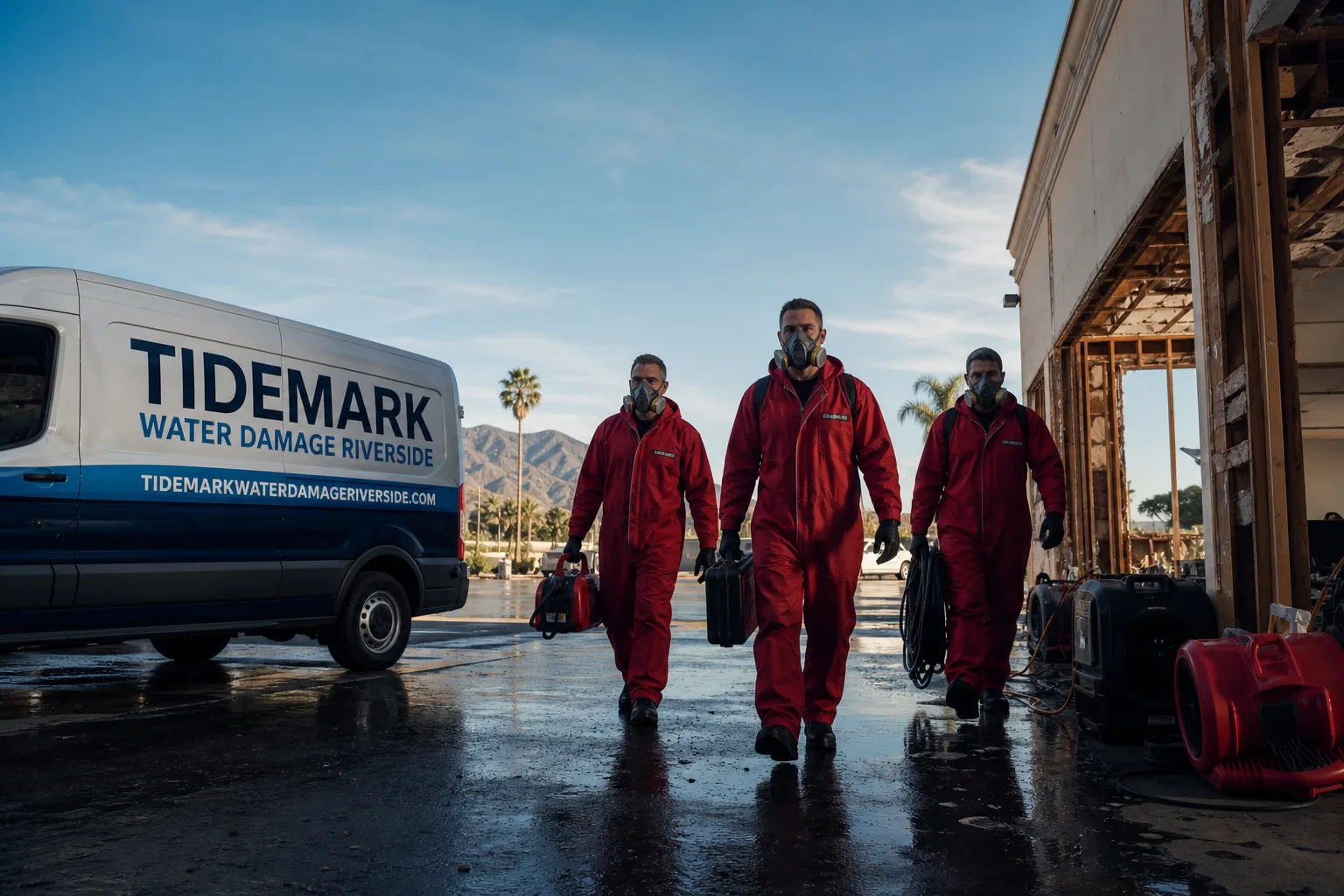
Why Tidemark Water Damage Riverside Is San Dimas’s Preferred Water Damage Restoration Company
We’re part of the Cedarwell Care Promise network, independently owned and operated, and we’ve been doing restoration work since 2006. Our technicians hold IICRC, RIA, and IFA credentials and show up in uniform, background-checked, with shoe covers and drop cloths on the truck before anyone steps inside your home. The written price comes first, every time. If it’s not done right, our 365-Day Done Right Promise means we make it right.
San Dimas homeowners tell us the same thing after jobs along San Dimas Canyon Road and around Lone Hill: they didn’t realize how far water traveled until our moisture mapping showed it. A tide mark is the line water leaves on a wall, and it’s the first thing our technicians look for on every job. We dry past it. We don’t chase the job. We chase where the water actually went.
Before our crew leaves, we photograph the clean-up, the drying equipment placement, and the final condition of floors and furnishings. You see what we did and how we left it. That’s a standard step, not an upsell.
Restoration work we handle
Water Mitigation in San Dimas
Water mitigation in San Dimas means stopping the spread of water, extracting what’s already pooled, and starting structural drying before mold has a chance to take hold, and because foothill homes here often carry wildfire soot and ash into the same wet materials, mitigation usually includes contamination testing before we decide between simple drying and full tear-out. In a 1,500 to 2,200 square foot ranch home, water mitigation typically runs $2,400 – $4,600. A larger two-story with water in multiple rooms often lands between $4,800 and $5,800.
Moisture Mapping and Containment Setup
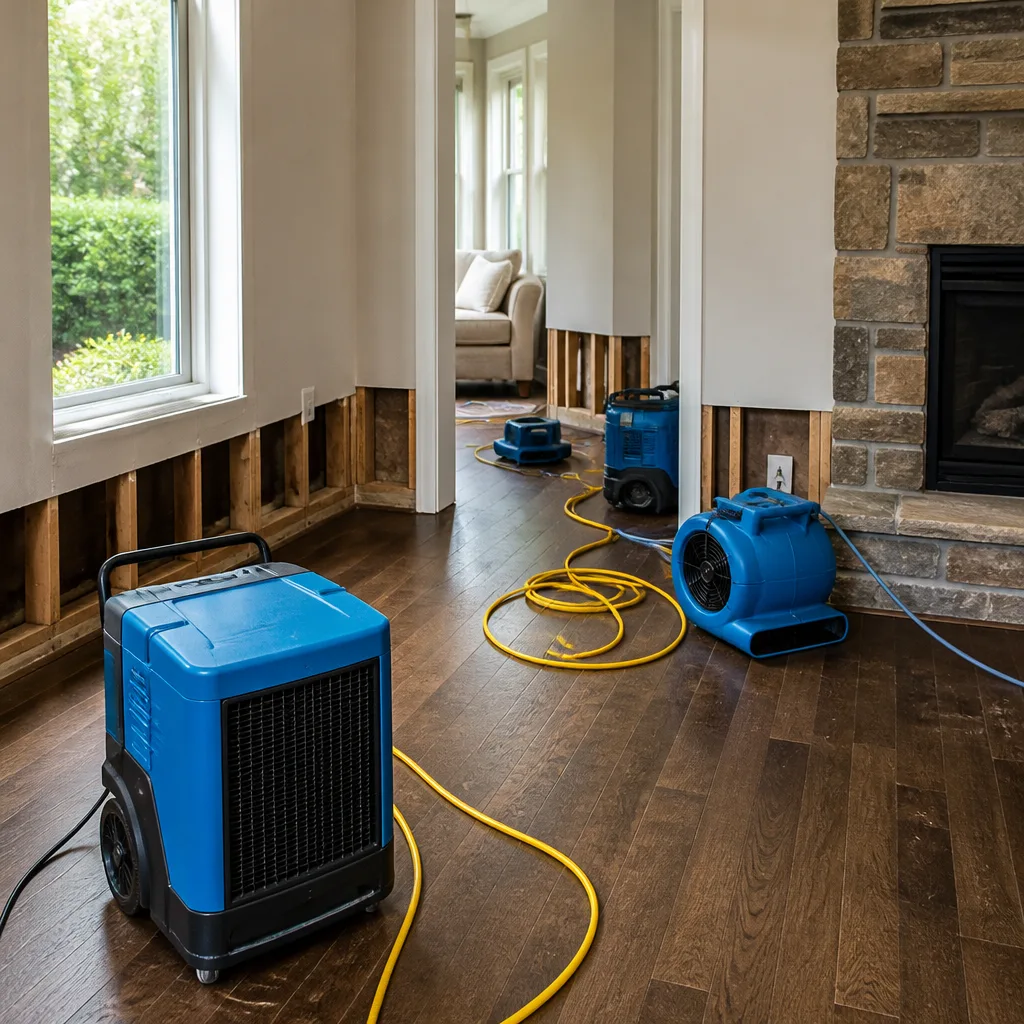
We map the full water path using moisture meters and thermal imaging. In a San Dimas home, that often means checking the attic first, because ember-driven ash that settled in vents and insulation during fire season can re-wetten when a pipe bursts overhead. Once we know the extent, we set containment to keep dirty air out of clean rooms, then place air movers and dehumidifiers from Dri-Eaz and Phoenix to drive moisture out of framing, drywall, and subfloor.
Antimicrobial Treatment and Soot Contamination
When wildfire ash mixes with a Category 1 leak, the water stops being clean. We apply antimicrobial treatment to affected framing and drywall before drying, and we recommend pack-out of saturated insulation and carpet when sediment is present. Skipping this step in a foothill neighborhood like San Dimas is why homeowners find mold in wall cavities weeks after a small leak. Our technicians don’t skip it.
Flooded Basement in San Dimas
A flooded basement in San Dimas is rarely a simple clean-water situation, especially after winter storms push debris flows off burn scars and into lower-lying streets, bringing Category 3 water, mud, and silt into finished basements along Golden Hills Road and San Dimas Canyon Road. Basement water removal and structural drying for a standard finished basement runs $3,800 – $7,200, depending on the water category, the size of the space, and whether the sump pump needs replacement.
Sump Pump Failure and Sediment Build-Up
Older San Dimas homes with original sump pumps often fail during the same storm that floods the basement. Sediment and silt from the foothills clog intake screens, the pump burns out, and groundwater rises through the slab. We check the pump and discharge line as part of every basement job. If it’s clogged with mud, we say so and include replacement in the written scope before any work starts.
Category 3 Removal and Drying Protocols
When Category 3 water, the kind that carries mud, sewage, or hillside runoff, enters a basement, we treat it as a contamination event, not a drying project. That means extraction with sediment-filtered pumps, cutting out saturated drywall and carpet, applying antimicrobial treatment, and running drying equipment until moisture readings return to pre-loss levels. Pet-safe drying agents are used where there’s a choice, and equipment runs on lower-decibel settings during school hours when kids are home.
Trusted Brands We Service in San Dimas
We run professional-grade equipment from Dri-Eaz, Phoenix, and XPOWER, and our technicians are credentialed through IFA, IICRC, and RIA. That matters in San Dimas because homes here present unusual combinations: water damage carrying ash residue and storm sediment requires machines that move air effectively without spreading particulate into clean rooms. We stock parts for these units locally and keep extra air movers and dehumidifiers staged for rapid deployment to San Dimas neighborhoods during storm season.
Common Water Damage Restoration Problems We See in San Dimas Homes
- Wood shake roof leaks mixed with ember ash. Foothill homes built in the 1960s and 1970s often still have original wood shake or shingle roofs. When wind-driven embers settle into the shakes during fire season, and winter rain follows, the water that drips through carries ash and soot into the attic and down interior walls, turning a simple roof leak into a full mitigation job.
- Debris flow sediment overwhelming sump pumps. After the 2014 Colby Fire, hillside drainage above San Dimas changed permanently. Winter rains now carry silt and fine sediment into basements along Golden Hills Road and San Dimas Canyon Road. Standard sump pumps clog, water backs up through floor drains, and homeowners face Category 3 water where they expected a minor seep.
- Recurring smoke odor mistaken for old water stains. Homeowners along the foothill streets sometimes dismiss a musty smell in the attic as old water damage from years ago. Our moisture readings and odor testing often reveal smoke residue from past wildfires that became active again when new moisture entered the space. Without odor-sealing and antimicrobial treatment, mold appears within 48 hours.
- Cast iron and galvanized drain lines past their service life. Ranch-style homes from the 1960s and 1970s across San Dimas still carry original drain and supply lines. A slow leak behind a wall or under a slab can go unnoticed for weeks, and by the time water shows up on the floor, it’s already wicked through the framing. Moisture mapping finds these hidden paths.
See the difference
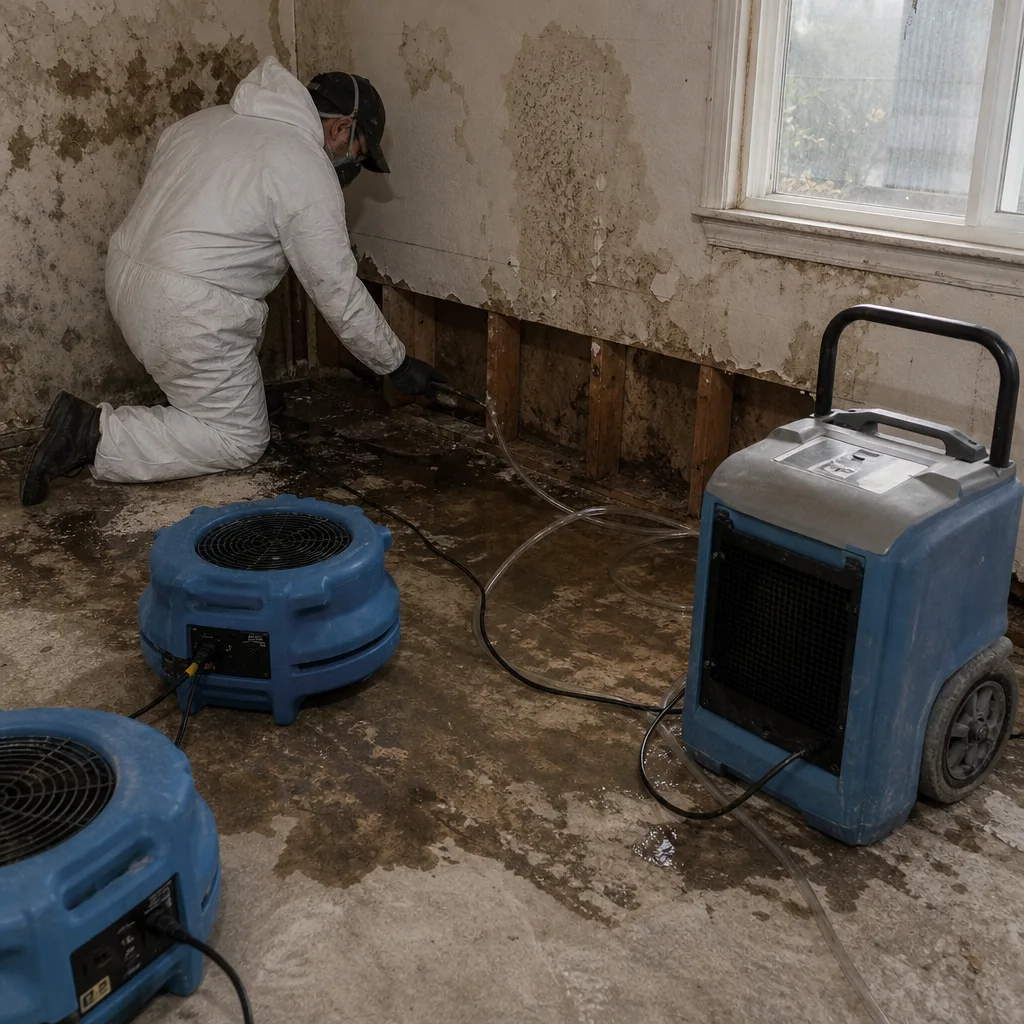 Before
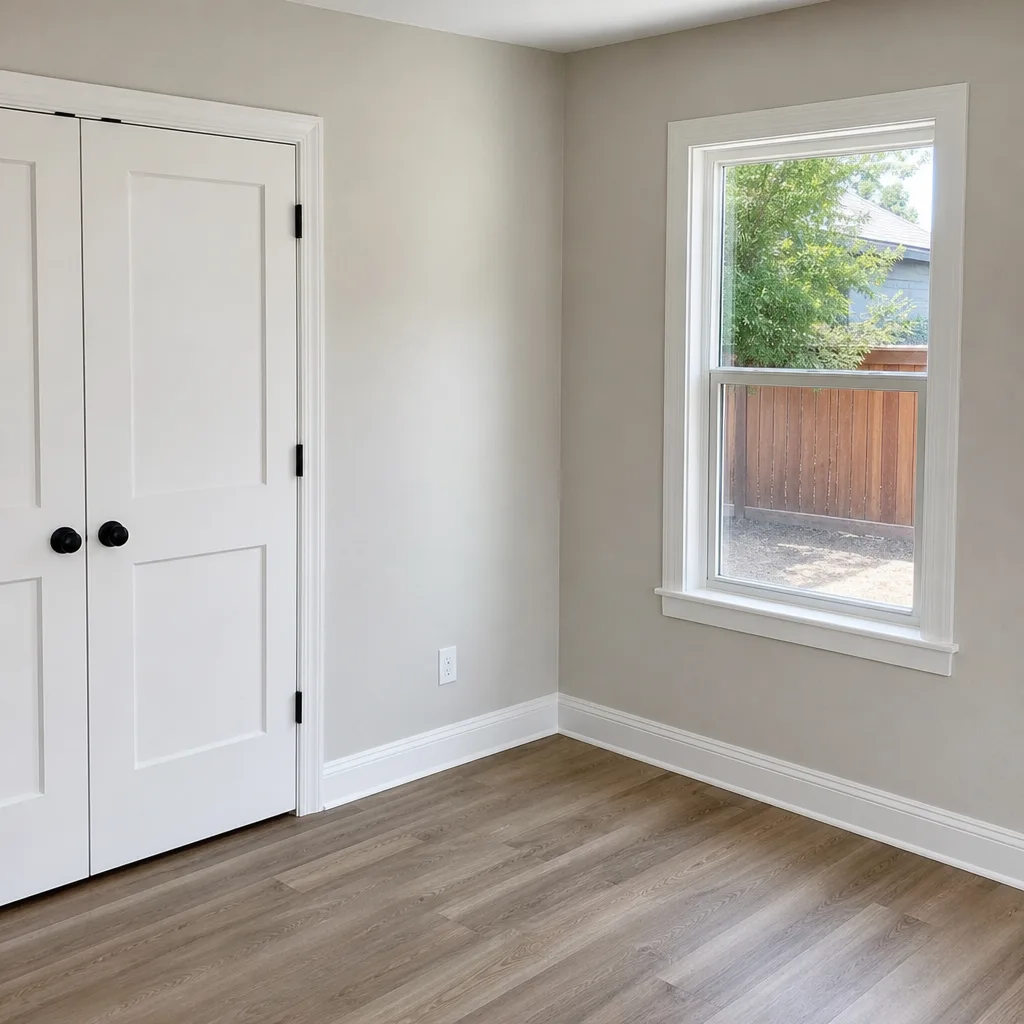 After
After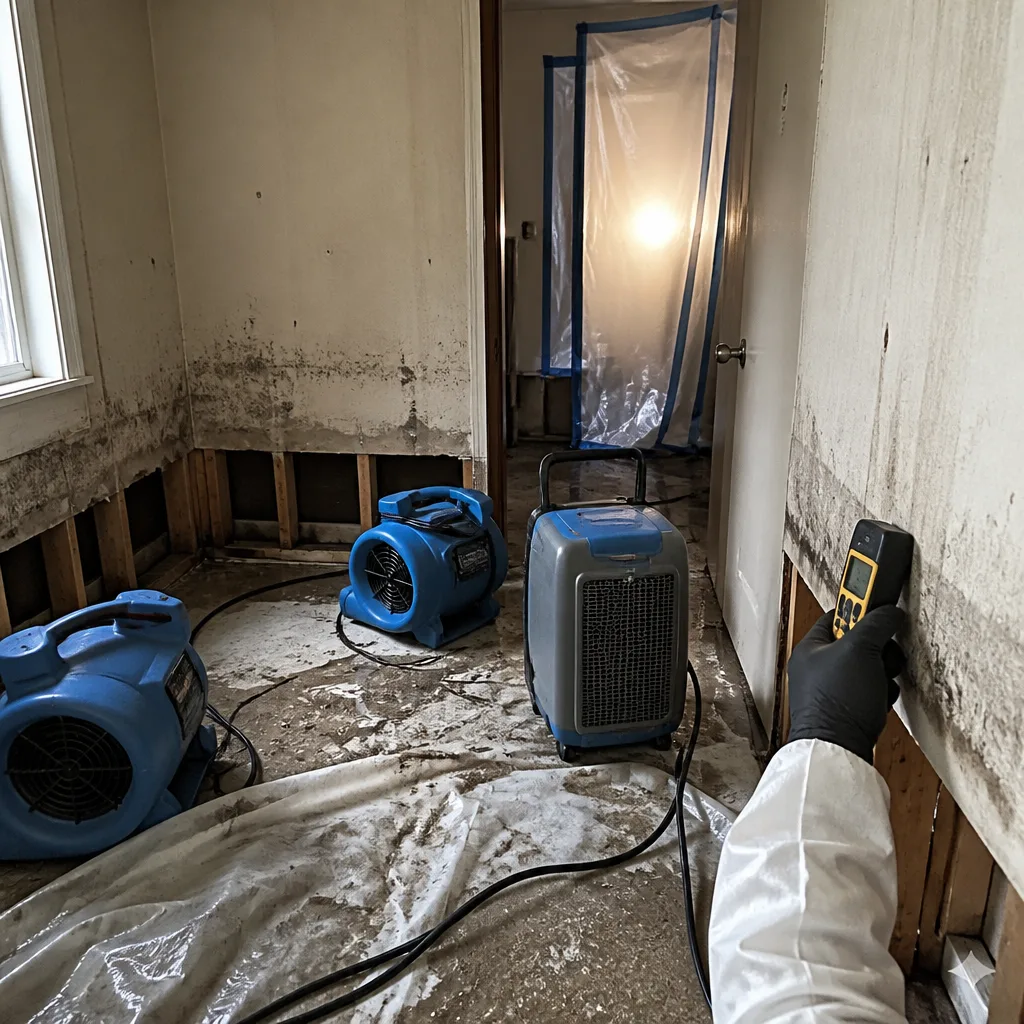 Before
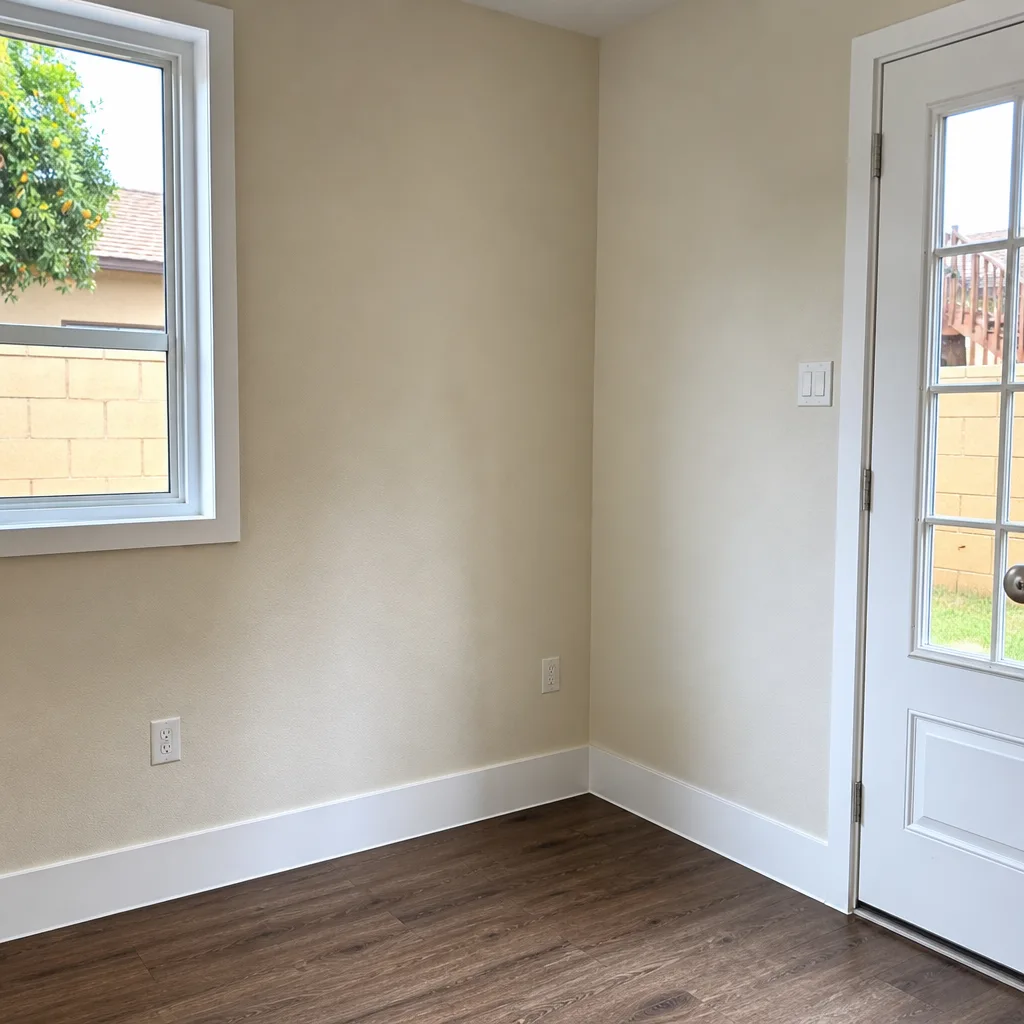 After
After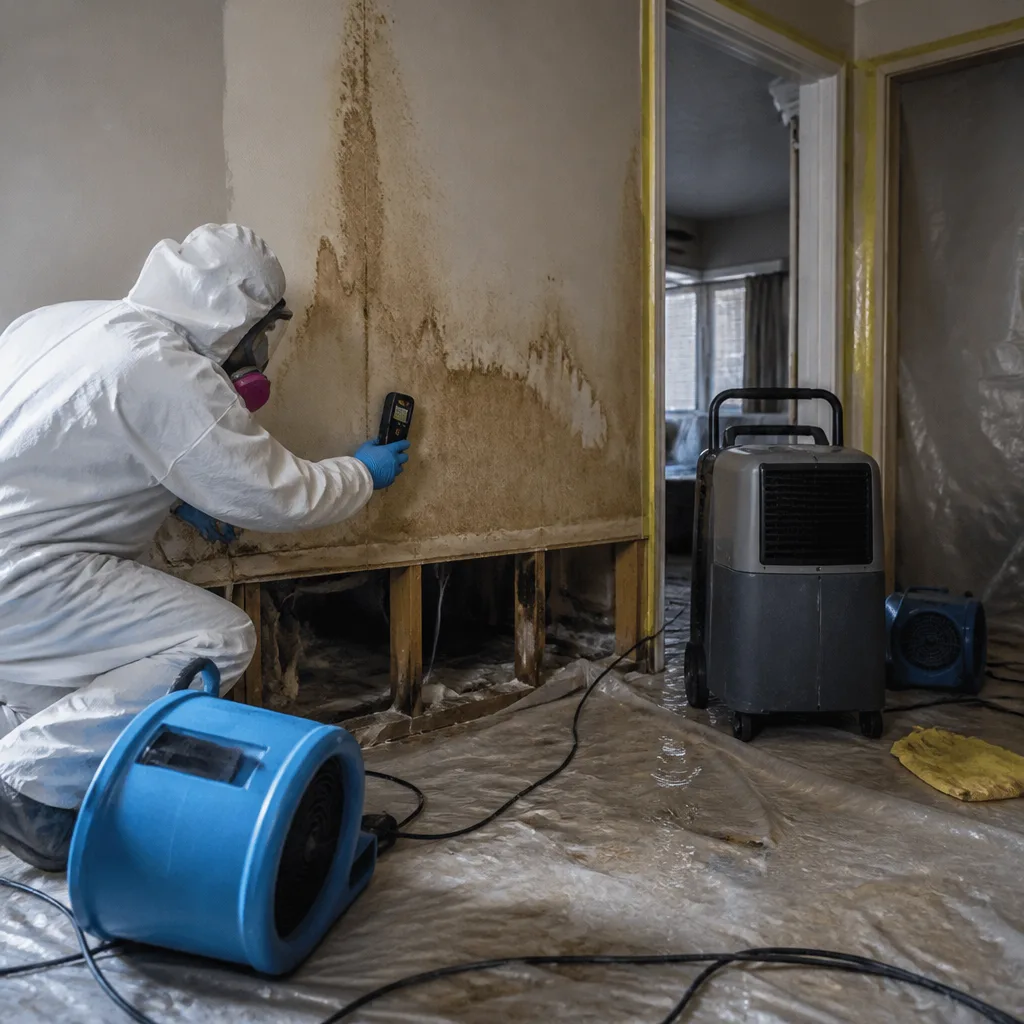 Before
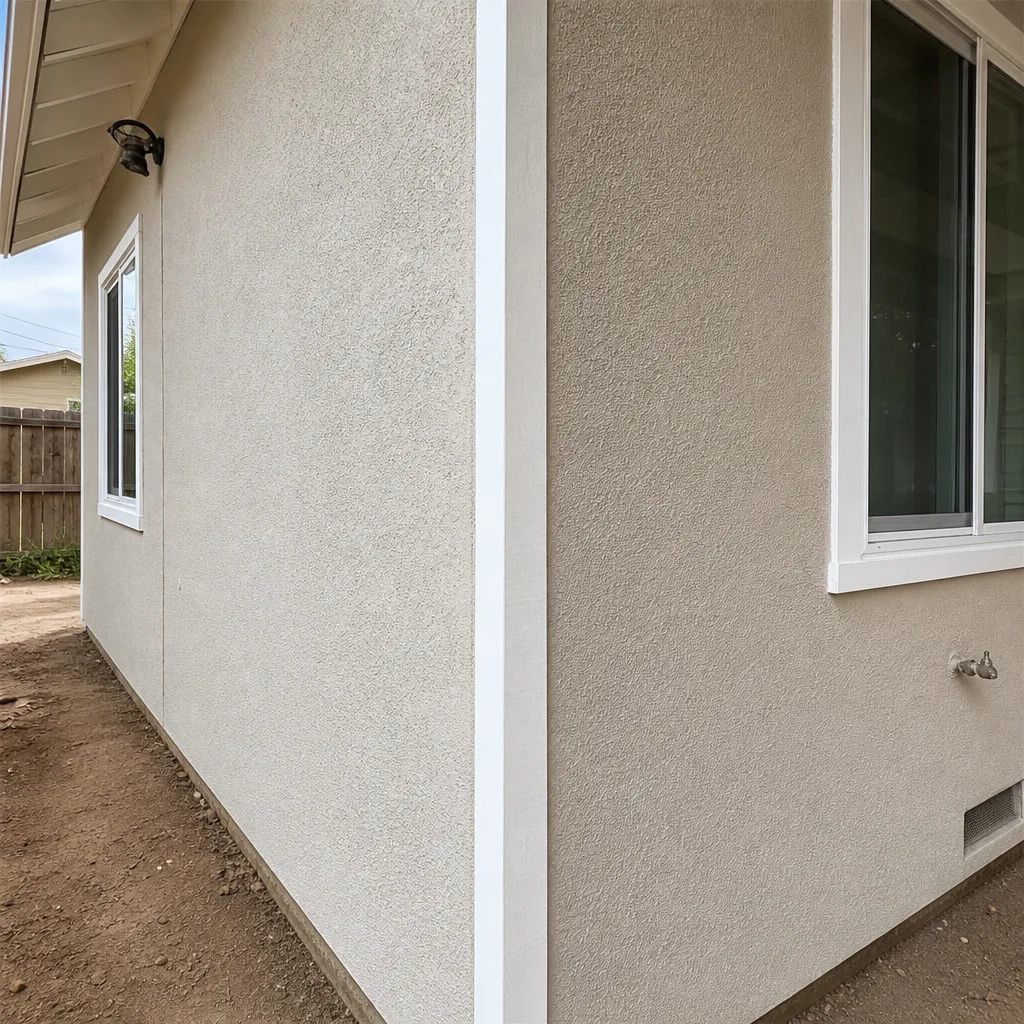 After
AfterPricing for Water Damage Restoration in San Dimas, CA
Water damage restoration in San Dimas runs between $2,400 and $7,200 for most residential jobs. Emergency water extraction alone typically costs $900 – $1,800 depending on the number of rooms affected. Structural drying and dehumidification usually adds $1,200 – $3,400. Flooded basement removal with Category 3 water starts around $3,800 and climbs based on the volume of contaminated material. Burst pipe restoration in a single room often falls between $2,800 and $4,500.
What moves the number is the water category, how far water traveled, and whether ash or sediment contaminated the materials. We give you a written price before any work starts. No exceptions. Call (341) 212-7342 for a free estimate specific to your San Dimas home.
We Also Serve Cities Near San Dimas
Our crews regularly handle Water Damage Restoration across the San Gabriel Valley foothills. Beyond San Dimas, we serve Claremont, Montclair, Upland, and Chino Hills with the same written price first, pet-safe products, and 365-Day Done Right Promise.
Serving San Dimas, CA - Our Local Coverage Area
We’re based in the San Dimas area and know this community well. Use the map below to see our service coverage - if you’re nearby, we can almost certainly help.
FAQs About Water Damage Restoration in San Dimas
Wildfire smoke and ash contaminate otherwise clean water, which means a Category 1 leak in a San Dimas home can quickly become a Category 2 or 3 situation requiring antimicrobial treatment and full material removal. We test for sediment and soot before deciding between drying and tear-out. Call (341) 212-7342 and we’ll explain what your specific situation requires.
Mudflow intrusion is Category 3 water, which is grossly contaminated and requires extraction, cut-out of saturated materials, antimicrobial treatment, and full structural drying. Homes along Golden Hills Road and San Dimas Canyon Road are the most common candidates after winter storms. If you see mud in your basement, call us before pumping begins so we can document the contamination level for your insurance claim.
Older ranch homes in San Dimas often hide water in wall cavities, under slabs, and in attic insulation where the original wood shake roof absorbed years of smoke residue. Simple extraction leaves behind trapped moisture that feeds mold within 48 hours. We use moisture mapping and drying equipment from Dri-Eaz and Phoenix to dry past the visible tide mark, not just to it.
Yes, smoke residue from the 2014 Colby Fire persists in attics and HVAC systems along San Dimas foothill streets, and when new moisture enters those spaces, the odor reactivates and can signal hidden contamination. We check for smoke residue on every water damage job in the foothills and include odor-sealing and antimicrobial treatment in the written scope when needed.
Mold can begin within 24 to 48 hours in San Dimas’s warm climate, and it often starts faster in areas where wildfire ash or sediment is present. The first thing to do is call (341) 212-7342 so we can arrive, shut off the water source, and start moisture mapping. No drying should begin until the contamination level is known.
Call Tidemark Water Damage Riverside for San Dimas Help Now
Water damage moves quickly, especially in San Dimas where foothill conditions complicate every stage of the job. Call (341) 212-7342 day or night and a live person will answer. We’ll give you a written price before any work starts, protect your floors and furnishings with shoe covers and drop cloths, and send a photographer to document the clean-up before the crew leaves. If it’s not done right, we make it right under our 365-Day Done Right Promise.
Written by Rick Sumner, Owner at Tidemark Water Damage Riverside, serving San Dimas since 2006.