
Last updated October 16, 2026
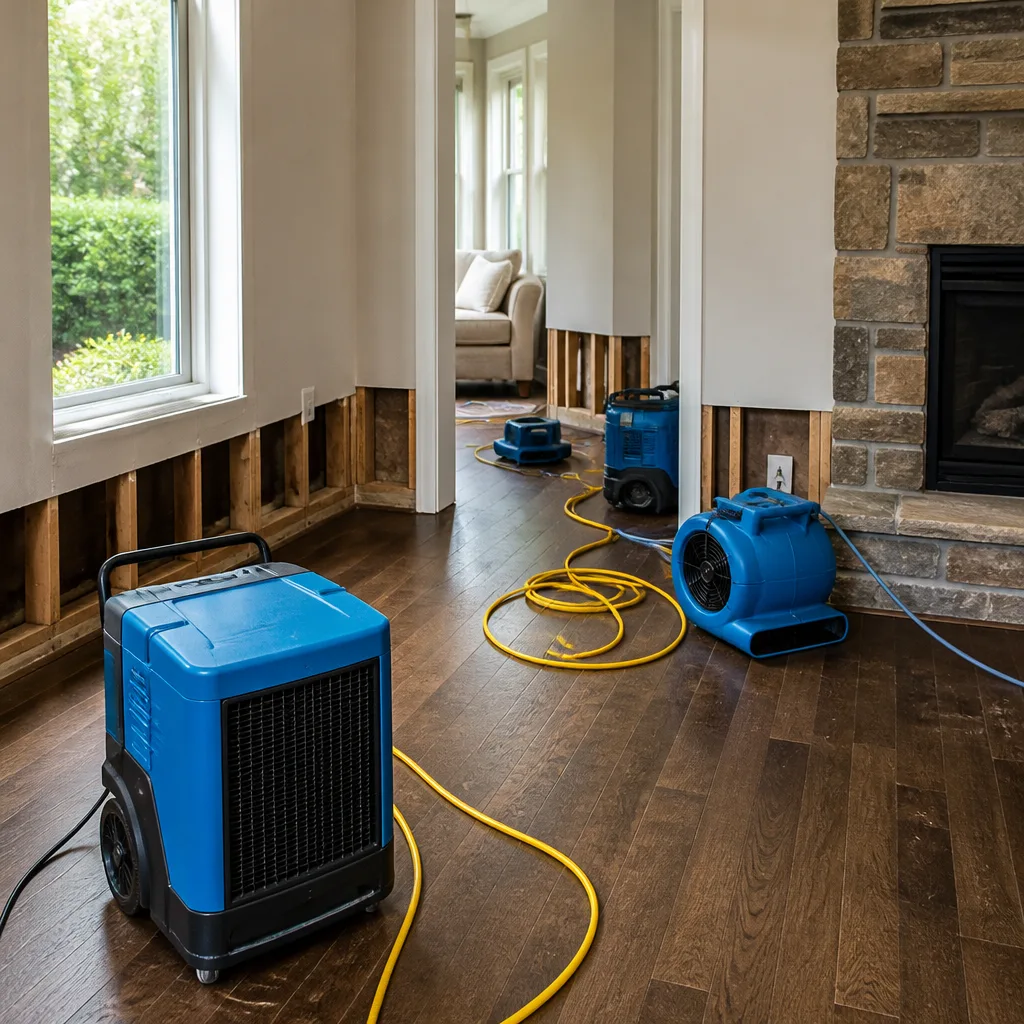 Water damage drying
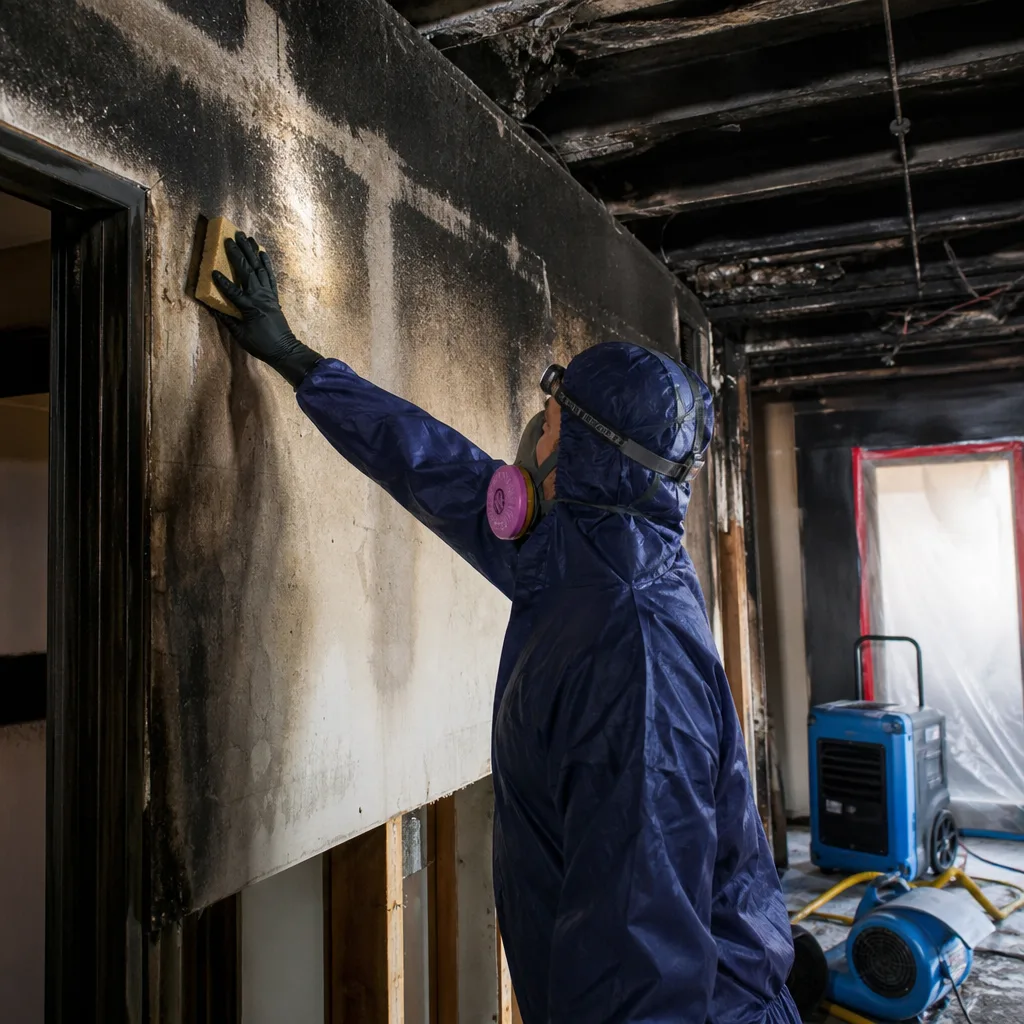
 Fire & smoke cleanup
 Mold remediation
 Storm response
 Sewage cleanup
 Reconstruction
Free visual inspection and a written scope of work before any mitigation begins - photos, moisture readings, and drying logs go in your claim file
The scope we write is the scope we bill. Anything new gets shown to you, in writing, before we touch it.
Get your free estimateHow to Hire a Damage Restoration Contractor in Riverside: A Step-by-Step Guide
California’s CSLB license lookup takes about 90 seconds. Yet the majority of homeowners who later file complaints against restoration contractors never checked their contractor’s license classification before signing anything, because no one told them the classification matters just as much as whether the license is active. This guide walks you through exactly how to vet, interview, and hire a damage restoration contractor in Riverside without getting burned, and it starts with three documents you should request before any equipment ever enters your house. For The Complete Guide to Damage Restoration in Riverside and more guides & resources, see our blog.
Restoration work we handle
Quick Answer
To hire a damage restoration contractor in Riverside, check their California license classification on the CSLB website first (a Class B general contractor cannot legally perform specialty C-33 painting or C-2 insulation work without the right endorsements), then request three documents before any work starts: a written scope with line-item pricing, proof of general liability and workers’ compensation insurance, and a written warranty term. Interview the contractor about their drying standards, confirm they answer calls with a live person, and never sign an assignment of benefits form without reading it twice.
Table of Contents
- Why the License Classification Matters More Than the License Number
- The Three Documents You Request Before Any Equipment Enters Your Home
- Red Flags Specific to Post-Storm Contractor Surges in the Inland Empire
- How to Use the CSLB License Lookup in 5 Minutes
- Interview Questions That Separate Real Restoration from Equipment Rental
- The Insurance Conversation: What to Say, What to Never Sign
- The Riverside Hiring Process, Step by Step
- Common Mistakes to Avoid
- When to Call a Professional
- Frequently Asked Questions
- The Bottom Line
Why the License Classification Matters More Than the License Number
Most homeowners do one thing when a restoration contractor shows up: they glance at a business card and maybe check that a license number exists. That is the bare minimum, and in California, it is not enough. The California Contractors State License Board, or CSLB, issues different license classifications that define exactly what a contractor is legally allowed to do. A contractor holding a Class B general building license can frame walls, hang drywall, and coordinate a remodel, but they cannot legally perform specialty work covered under a C-33 painting and decorating classification, a C-2 insulation classification, or several other trades without holding those specific credentials.
Why does this matter after a water loss in Riverside? Because a water damage restoration job is rarely one trade. It involves demolition, drying, sometimes mold remediation, and then reconstruction. The technician who pulls out wet drywall is not necessarily licensed to re-insulate and repaint that same wall. We have seen jobs in Riverside where a contractor with only a Class B license completed specialty work that later surfaced on an insurance claim, and the homeowner was left arguing with a claims adjuster about whether the work was covered when the license did not match the activity.
Here is what to look for when you verify a contractor’s license:
- Class B – General Building Contractor: Legal for structural framing, drywall, finish carpentry, and general restoration construction. This is the broad but not unlimited classification.
- C-33 – Painting and Decorating: Required for any wall or ceiling painting work, including the repaint after water or fire restoration.
- C-2 – Insulation and Acoustical: Required for the reinstallation of insulation after a water loss or fire damage remediation.
- C-15 – Flooring and Floor Covering: Applies when a restoration contractor installs new carpet, vinyl, or hardwood after water removal.
- C-54 – Ceramic and Mosaic Tile: Needed if the rebuild includes tile work in a bathroom or kitchen.
The active status of the license is not the only thing you check. The classification listed beside the license number tells you what the contractor is legally permitted to touch inside your house. In our experience, the smoothest claims and the most durable repairs in Riverside come from contractors who hold multiple relevant classifications or who pull properly licensed subcontractors for each specialty trade and show you that paperwork before the trade begins.
The Three Documents You Request Before Any Equipment Enters Your Home
The single most consequential decision you make after water damage, fire damage, or a sewage backup in Riverside is not which company to call first. It is knowing which documents to request before any equipment enters the house. Those documents determine whether insurance pays, whether the work is warrantied, and whether the contractor can legally perform the work in California. There are three of them, and a reputable contractor will produce all three without blinking.
Document one is a written scope of work with line-item pricing. This is not a verbal estimate, not a number scribbled on a notepad, not a handshake. It is a document that lists every task the contractor expects to perform and attaches a dollar amount to each line. If the contractor says a number out loud but will not commit it to writing before starting, walk away. In Riverside, where post-storm demand can stretch contractors thin, verbal-only price quotes are one of the most common red flags reported by homeowners who end up with final invoices thousands of dollars above what they expected. A written price before any work starts means the final invoice should not surprise you. At Tidemark Water Damage Restoration in Riverside, we deliver a written price before a single piece of equipment is unloaded, on every job, with no exceptions.
Document two is proof of general liability and workers’ compensation insurance. Ask for certificates of insurance directly from the carrier, not a photocopy of a policy number that the contractor typed onto a flyer. General liability protects your home if the contractor’s work causes further damage. Workers’ comp protects you entirely if a technician gets hurt on your property. Without workers’ comp, an injured worker can file a claim against your homeowner’s policy. In California, restoration contractors are required to carry workers’ comp if they have any employees. Ask to see the certificate. A contractor who hesitates is a contractor you do not want in your home.
Document three is a written warranty term. A real warranty has a duration, a scope, and a process for making a claim. “We stand behind our work” is not a warranty. Neither is “we will fix it if there is a problem.” A written warranty says something specific: “All new materials and labor are covered for 365 days. If any defect in workmanship appears within that period, we will repair or replace the affected work at no charge.” At Tidemark Water Damage Riverside, every job is covered by our 365-Day Done Right Promise: if the restoration is not done right, we make it right. That promise is written, it has a term, and it means the crew will be back long after the equipment is gone if anything is not correct.
Red Flags Specific to Post-Storm Contractor Surges in the Inland Empire
Riverside sits in the Inland Empire, where winter storms and summer microbursts create sudden surges in restoration demand, which is why Seasonal Damage Restoration Care for Riverside: Year-Round Homeowner’s Guide matters. When that happens, out-of-town contractors sweep in, and a predictable set of bad behaviors follows. Knowing these red flags before you ever make a call saves you from becoming another complaint file at the CSLB.
The first red flag is the assignment-of-benefits pressure. An assignment of benefits, or AOB, is a legal document that transfers your insurance claim rights to the contractor. In some states, AOBs create a direct payment path from insurer to contractor. In California, AOBs are far less common and far more risky for homeowners. A contractor pushing you to sign an AOB before you have seen a written scope is a contractor who wants to control your claim. You should never sign one without a full written scope in front of you, and even then, you should understand exactly what rights you are giving up. We have seen homeowners in Riverside who signed an AOB at 11 p.m. during a storm surge and spent the next month arguing with an adjuster over work they never approved.
The second red flag is the verbal-only price quote. When demand spikes, some contractors try to rush past the documentation step. They say something like “we will get a written estimate to you tomorrow, but we need to start extracting water right now.” Do not fall for it. A reputable restorer can write a scope quickly, even during an emergency. If we arrive at a water loss in Riverside at any hour, the written scope goes to the homeowner before the drying equipment comes off the truck. There is no emergency exception to that rule.
The third red flag is the crew that does not match the salesperson. A company sends a polished rep to sign the work, then a different crew arrives with different branding on the van, and suddenly the homeowner cannot get anyone on the phone. Before you sign anything, ask: “Who is the crew lead, and what company do they work for?” Then verify that name on the CSLB lookup. Subcontracting is common in restoration, but the homeowner has a right to know who is in the house and under what license they operate.
The fourth red flag is a deposit demand before any work contract exists. While some restoration companies request deposits for large reconstruction scopes, no legitimate contractor should ask for a full payment or a large cash deposit before you have signed a written scope. In Riverside, the standard pattern for emergency restoration is: written scope, then work begins, then billing aligns with insurance processing or the agreed payment schedule.
How to Use the CSLB License Lookup in 5 Minutes
The California Contractors State License Board maintains a public lookup tool that takes roughly 90 seconds to run. Here is the process, step by step, so you can do it from your phone while a contractor stands in your driveway.
- Go to cslb.ca.gov and click “Check a License” on the homepage.
- Enter the license number the contractor gave you, or search by business name if you do not have a number. Beware of similar-sounding names: one extra word in the company name can mean an entirely different company.
- Look at the license status. It will say one of four things: Active, Inactive, Suspended, or Expired. Only Active means the contractor is legally permitted to work in California right now.
- Check the classification. This is the part most homeowners skip. The classification tells you what kind of work the contractor is licensed to perform. A Class B license does not cover C-33 painting or C-2 insulation work.
- Look at the issue date and any enforcement actions. A license issued two weeks ago is not automatically a problem, but it is a data point. A contractor with five years of continuous active status and no enforcement actions is a stronger bet than one with a suspended license that was recently reactivated.
- Check the workers’ comp status. The lookup will tell you whether the contractor currently carries workers’ compensation insurance. If it says “None,” and the contractor has employees, that is a problem.
What the status terms actually mean for your legal protection matters. An active license means the contractor has met California’s bond, insurance, and exam requirements. A suspended license means the contractor has failed to meet a requirement like bond renewal or a judgment payment, and they cannot legally perform contracting work in the state while that status is in effect. An expired license means the contractor did not renew on time. Neither suspended nor expired contractors should be working on your Riverside home. If you hire one, you lose most of the legal protections the CSLB provides, including access to the contractor’s bond if something goes wrong.
Interview Questions That Separate Real Restoration from Equipment Rental
The difference between a contractor who actually dries a structure to the IICRC S500 standard and one who simply runs dehumidifiers until they feel like stopping is visible in the first five minutes of an interview. The IICRC S500 is the industry standard reference for professional water damage restoration, and it defines how moisture should be measured, documented, and dried. A contractor who follows it will talk about data. A contractor who does not will talk about equipment. Here are the questions that reveal which one you are talking to.
“How do you know when the drying is complete?” A standard-driven contractor will explain that they measure moisture content in the affected materials with a moisture meter and compare those readings to the moisture content of unaffected materials in the same room. They will say something like “we dry until the affected area matches the dry standard.” A contractor who says “when the equipment has been running for three days” or “when the walls feel dry” is not following the S500. Drying by calendar or by touch is how you end up with hidden moisture behind baseboards and mold inside wall cavities months later.
“What is your process for finding hidden moisture?” The right answer includes specific tools: moisture meters, thermal imaging cameras, and sometimes invasive probes to check wall cavities. The S500 standard treats water as a migratory problem. Water travels, wicks up drywall, and hides behind baseboards and under flooring. At Tidemark, we look for the tide mark, the line water leaves on a wall as it recedes. It is the first thing our technicians look for on every job. The tide mark tells us where the water traveled, and we dry past it, not just the visible wet patch. A contractor who only sets up fans in the room where you saw water is not finding the tide mark.
“Do you use any products that are unsafe around kids or pets?” A contractor who says “it is all safe” without specifics has not thought about your family. The right answer addresses product choices directly. We use pet-safe drying agents where there is a choice, and lower-decibel settings during school hours and nap time. A quiet crew that respects nap time should not be a luxury in this trade; it should be standard. Riverside homes have families with children and pets, and any contractor you hire should be able to talk about how their process protects both.
“How do you protect my floors and furnishings during the work?” The right contractor has a specific, automatic answer: shoe covers go on at the door, drop cloths cover the floor before the first piece of equipment comes in, and protective floor mats line the path from the entry to the work area. We load shoe covers and drop cloths onto every truck before it leaves. It is a standard step, not an upsell. If the contractor looks confused by the question, their crew is going to track water and debris through your house.
The Insurance Conversation: What to Say, What to Never Sign
Insurance is in the room on almost every restoration job in Riverside, even when no one says the word out loud. The way you handle the insurance conversation determines whether you get full coverage for the work or end up paying out of pocket for mistakes made in the first 48 hours.
The first thing to understand is that insurance claims adjusters are responsive to documentation. A restoration contractor who takes photos of the damage as it exists when they first arrive, documents the moisture readings throughout the drying process, and provides a photo of the clean-up before the crew leaves is a contractor who is helping your claim. At Tidemark Water Damage Riverside, a photo of the clean-up is taken and shared before the crew leaves, so the homeowner sees exactly what was done and how it was left, and the adjuster sees the same documentation. Direct adjuster coordination is standard if the homeowner wants it. If the contractor will not document the work, your claim gets harder, not easier.
Do not sign a work authorization you have not read in full. Some work authorizations include clauses that assign your insurance rights to the contractor, and once signed, that clause controls how the claim is paid. Ask the contractor to walk you through the form line by line. A contractor who pressures you to “just sign so we can get started” is testing you. The extra ten minutes it takes to read the document is worth more than the thousands of dollars a bad clause can cost you.
When you call your insurer, ask these questions directly: “Do I need to use a contractor from your preferred list, or can I choose my own?” “What is my deductible?” “Does my policy cover the full cost of drying and restoration, or is there a sub-limit?” “Do you need a written scope from the contractor before I sign a work authorization?” You have the right to choose your own contractor in California, even if your insurer has preferred vendors. Do not let an insurer pressure you into a contractor you have not vetted.
The Riverside Hiring Process, Step by Step
Here is the entire process, in order, so you can follow it from your phone while water sits on the floor of your Riverside living room. This is not the fastest possible sequence. It is the safest. The fastest sequence is how homeowners end up with unlicensed contractors, unwritten prices, and uninsured workers in their homes.
- Stop the source of water if you can do so safely. Shut off the main water valve or the local shutoff valve for the affected fixture. If the water is from a sewage backup or a roof leak, do not attempt repairs yourself. Turn off power to the affected area if water is near electrical outlets or appliances.
- Call your insurance company. Start the claim before you start calling contractors. Your insurer may ask you to take photos before anything is disturbed. Take those photos of the tide mark, the standing water, and the affected materials.
- Call a restoration contractor to schedule an assessment. Look for a company that answers the phone with a live person, not a voicemail or a callback queue. Water damage in Riverside does not wait for business hours. Tidemark Water Damage Riverside has live phone support 24 hours a day, 7 days a week, always answered by a real person at our main office.
- Run the CSLB license lookup while you are on the phone. Ask the contractor for their license number, then check it while they wait. Confirm the status is Active and the classification matches the work they will perform.
- Request the three documents before work begins. Written scope with line-item pricing, proof of general liability and workers’ comp, and a written warranty term. If the contractor cannot produce all three, end the conversation.
- Sign the work authorization only after you have read it. The contractor should walk you through it line by line. If there is an assignment-of-benefits clause, ask what it means before you sign.
- Meet the crew lead before work starts. Ask for the name of the person who will lead the crew, then confirm that name matches the contractor’s license. Shoe covers should go on at the door. Drop cloths should cover the floors before the first piece of equipment comes in.
- Take your own photos throughout the process. Document the damage, the equipment, and the clean-up. The more documentation, the smoother the insurance claim.
- Confirm the final invoice matches the written scope. Before you pay, compare the final invoice against the written scope you received before the work started. If there is a discrepancy, ask the contractor to explain it in writing.
Common Mistakes to Avoid
- Hiring a contractor without checking the CSLB license classification. An active license is not enough. A Class B contractor cannot legally perform C-33 painting or C-2 insulation work. Verify the classification matches the specific work they will do in your home.
- Accepting a verbal-only price quote. In the post-storm rush in Riverside, verbal quotes are common and dangerous. A written scope with line-item pricing is the only document that protects you from a surprise final invoice.
- Letting a contractor begin work before you have seen proof of insurance. Without workers’ comp, an injured technician’s medical claim can become your financial problem. Without general liability, damage caused by the contractor’s work may not be covered.
- Signing an assignment of benefits without reading it fully. An AOB can transfer control of your insurance claim to the contractor. Read it line by line, ask what every clause means, and walk away if the contractor pressures you to sign before you have seen a written scope.
- Choosing a contractor based on response speed alone. Fast is good. Fast and unvetted is how homeowners end up with unlicensed work and unpaid claims. The 10 minutes it takes to check a license and request three documents is worth it.
- Not confirming that the crew lead matches the salesperson’s company. Some surge contractors subcontract work to crews from other companies. Before the work starts, confirm who is in charge and whose license they work under.
- Paying in full before the work is complete and the final invoice matches the written scope. The final invoice should match the written scope. If it does not, do not pay until the discrepancy is explained in writing.
When to Call a Professional
Call a professional restoration contractor in Riverside if water has been present for more than 24 hours, if the water came from a sewage source, if the affected area includes drywall or insulation that got soaked, if there is visible mold growth, or if the loss involved fire or smoke. These scenarios require professional drying equipment, moisture measurement, and proper containment. What looks dry on the surface is often wet inside the wall cavity. If the water has traveled behind baseboards, under flooring, or into an adjacent room, you need a professional to find the tide mark and dry past it. Tidemark Water Damage Riverside offers free estimates in Riverside, and every estimate includes a written price before any work starts. Call (341) 212-7342 for a free estimate, and a live person will answer the phone.
Frequently Asked Questions
Most water damage restoration jobs in Riverside range from $2,500 to $10,000 depending on the affected area, the category of water, and the extent of drying needed. A written scope with line-item pricing, delivered before any work starts, is the only way to know your exact number. Call (341) 212-7342 for a free estimate with no obligation.
Most homeowners’ policies cover sudden and accidental water damage, like a burst pipe or an appliance leak, but not gradual damage from a long-standing leak. The exact coverage depends on your policy language, your deductible, and the cause of the loss. A contractor who documents the damage with photos and moisture readings before and during the work makes your claim easier to support.
A live-person call line and an emergency dispatch process are the two most important speed factors. Water damage in Riverside does not wait for business hours, and neither should your contractor. At Tidemark, calls are answered by a live person 24/7, not a voicemail or a callback queue. Our Riverside response time is typically measured in hours, not days.
Water damage restoration removes the water and dries the structure; mold remediation removes existing mold growth and addresses the moisture source that feeds it. A single loss can require both, which is why mold remediation in Riverside often follows a water damage job when drying was incomplete or delayed.
It depends on the work. Structural repairs, drywall replacement, and finish carpentry require a Class B general building license. Painting requires a C-33, insulation requires a C-2, and flooring requires a C-15. A restoration contractor who holds multiple classifications or properly licensed subcontractors is the safest choice.
The 365-Day Done Right Promise is Tidemark’s written warranty term: if the restoration is not done right, we make it right. Every job is covered, from water damage and fire damage restoration in Riverside to full reconstruction, and the promise extends long after the crew has left.
The Bottom Line
Hiring a damage restoration contractor in Riverside is not about finding the first company that answers the phone. It is about checking the CSLB license classification, requesting three documents before any equipment enters the house, and asking interview questions that reveal whether the contractor actually dries to IICRC S500 standard or just runs equipment until they feel like stopping. A written scope with line-item pricing, proof of general liability and workers’ comp, and a written warranty term protect you from surprise invoices, uninsured workers, and work that fails after the crew leaves. At Tidemark Water Damage Riverside, those three documents are standard on every job, and our 365-Day Done Right Promise means we stand behind the work long after the tide mark is gone. Call (341) 212-7342 and a live person will answer.
Written by Rick Sumner, Owner at Tidemark Water Damage Riverside, serving Riverside since 2006.
See the difference
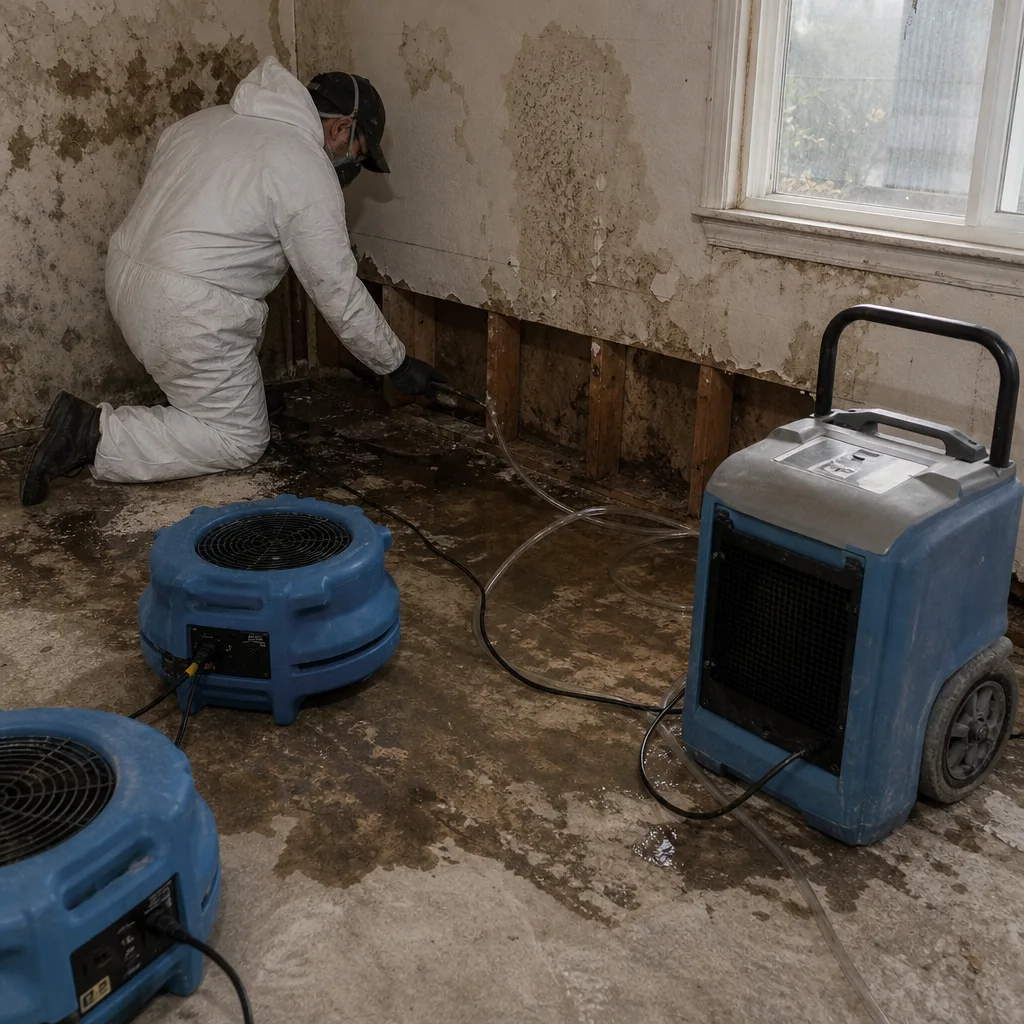 Before
 After
After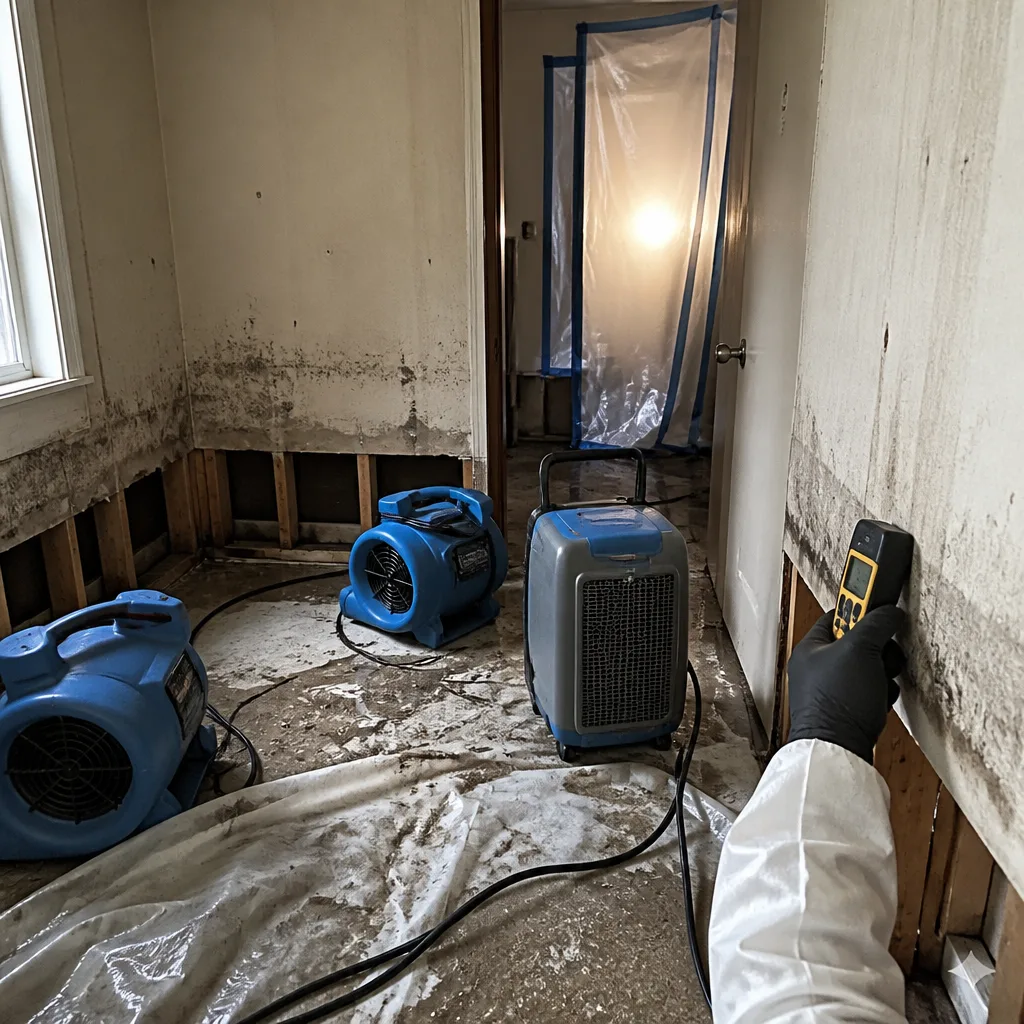 Before
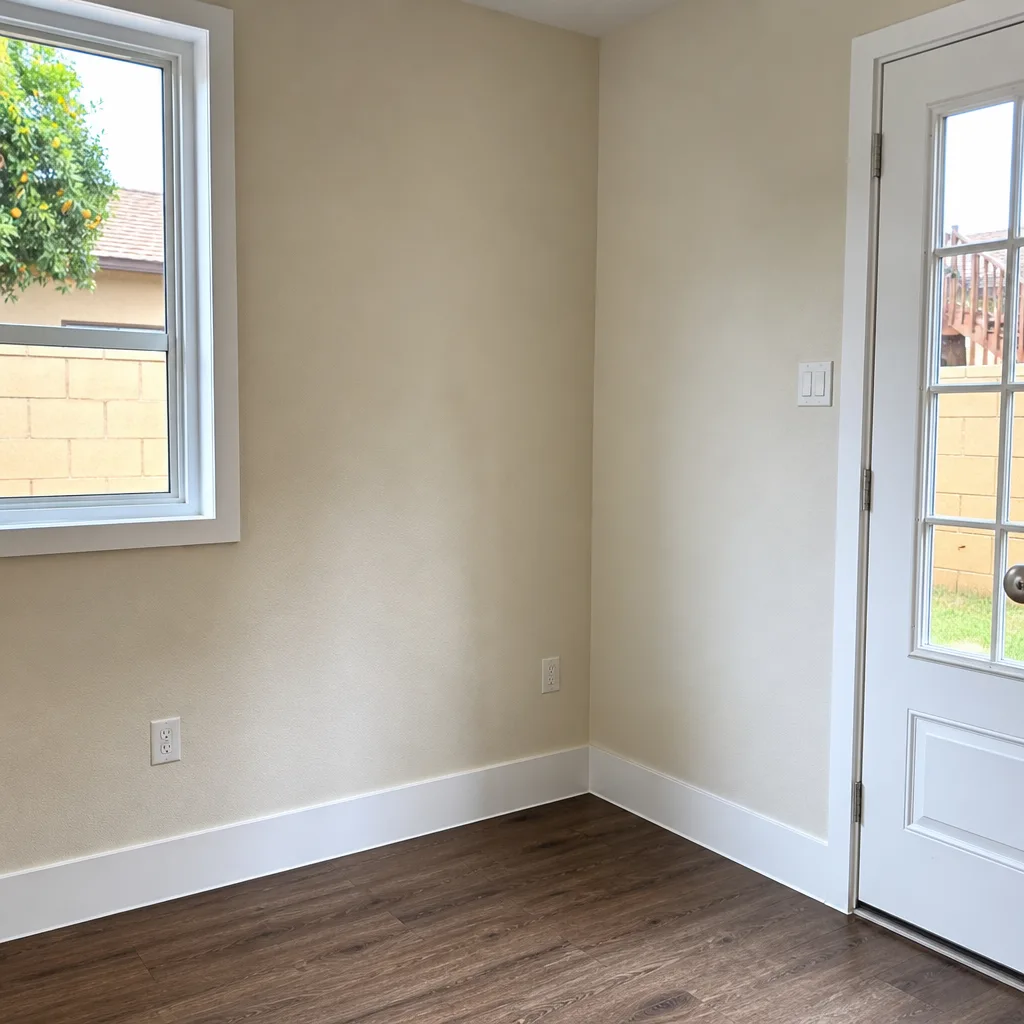 After
After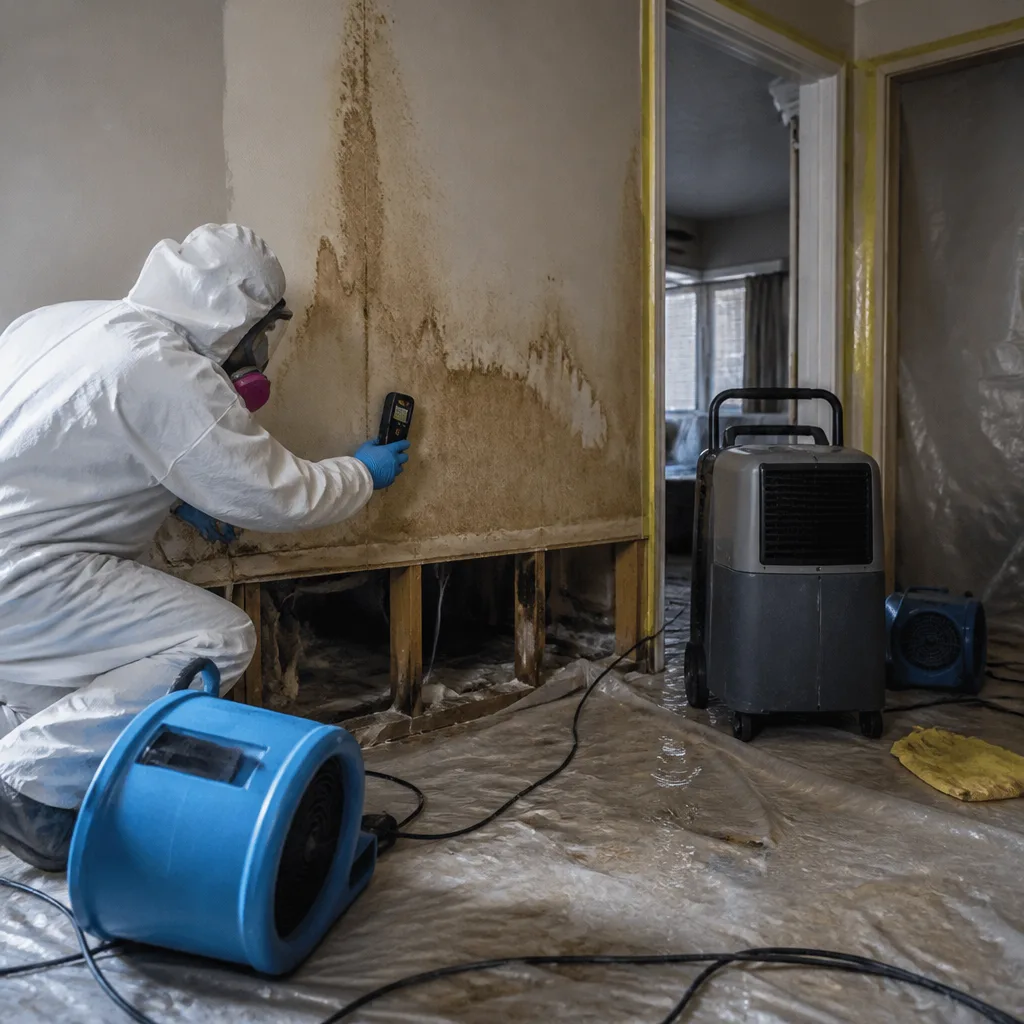 Before
 After
After